[Click on image for full view]
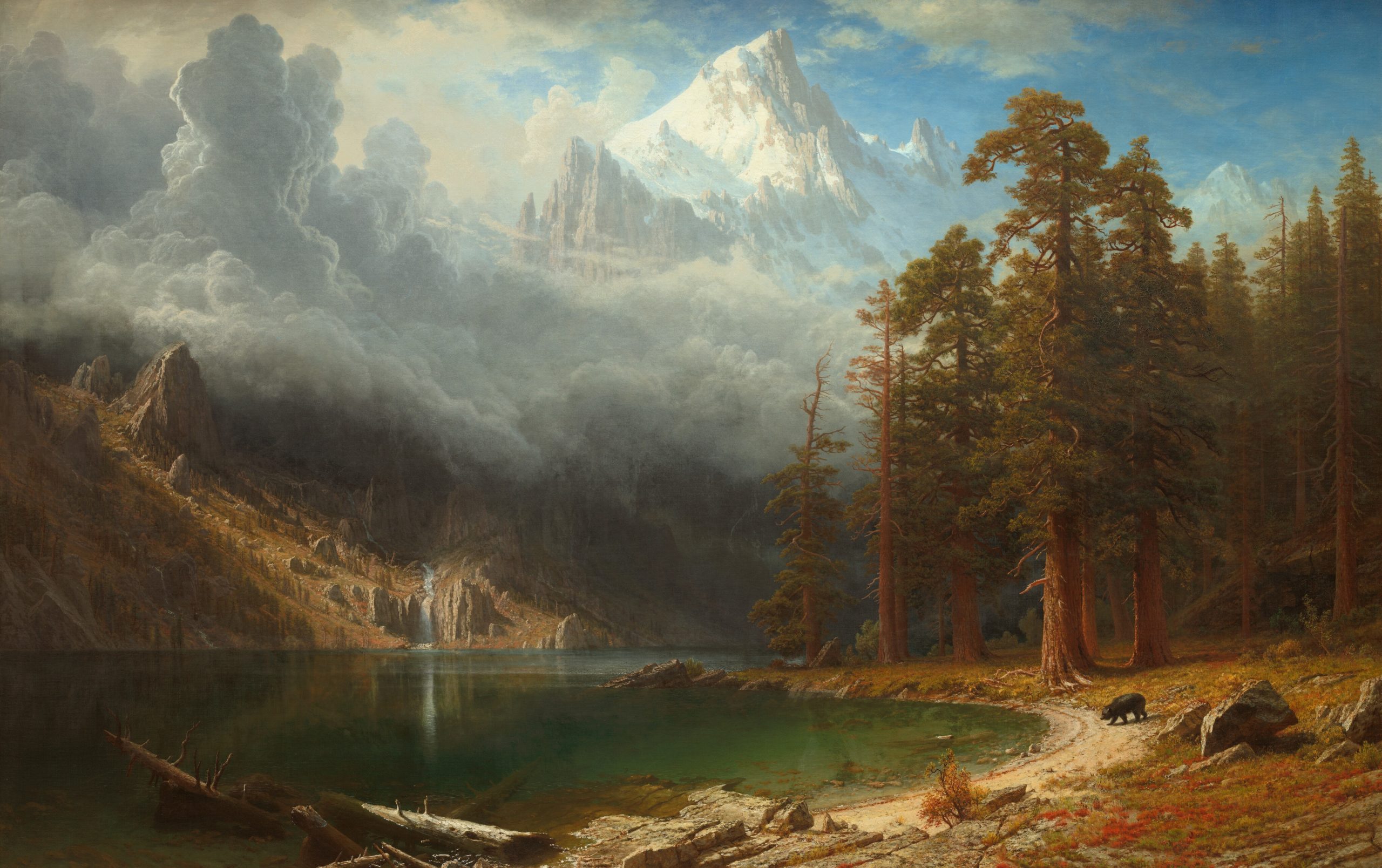
by Albert Bierstadt
Courtesy of the National Gallery of Art, Washington, D.C.
Overview
In 1877 Albert Bierstadt displayed this enormous composite of Sierra Nevada mountain views at a New York City exhibition with the generic title Mountain Lake. The following year, inspired in part by the Corcoran Gallery of Art’s well-publicized purchase of his rival Frederic Edwin Church’s Niagara, Bierstadt offered the work—rechristened Mount Corcoran—to the museum and its founder, William Wilson Corcoran. Staff and board members were deeply suspicious, but Bierstadt presented them with a War Department map showing the mountain’s location. Curator William MacLeod opined that a government official had manually added Corcoran’s name to the document, but it was revealed that the artist had, in fact, named a specific Sierra Nevada peak for the banker (albeit after he had offered him the canvas). Undeterred by the controversy surrounding the painting’s acquisition, the artist stated: “I am happy to have named one of our highest mountains after him, the first to catch the morning sunlight [and] the last to say good night.”
Bierstadt was the first artist to use his European training to translate field studies into expansive paintings celebrating western American grandeur. Evident everywhere in Mount Corcoran, from the glassy water to the snowy mountain peaks, are the artist’s detailed naturalism and smooth surfaces. Following the discovery of gold in California, the American West became a source of intense fascination for East Coast art patrons and armchair travelers alike who were eager to see images of the vistas enthusiastically described by forty-niners, surveyors, and journalists. In 1859 Bierstadt joined US Army Colonel Frederick W. Lander’s survey party to the Rocky Mountains. Four years later he set his sights on California’s spectacular Yosemite Valley. When he returned to New York following that trip, Bierstadt began producing stunning landscapes such as Mount Corcoranthat introduced eastern audiences to the natural wonders of the West.
More information on this painting can be found in the free PDF of Corcoran Gallery of Art: American Paintings to 1945, available for download at https://www.nga.gov/content/dam/ngaweb/research/publications/pdfs/corcoran-american-art.pdf
Courtesy of the National Gallery of Art
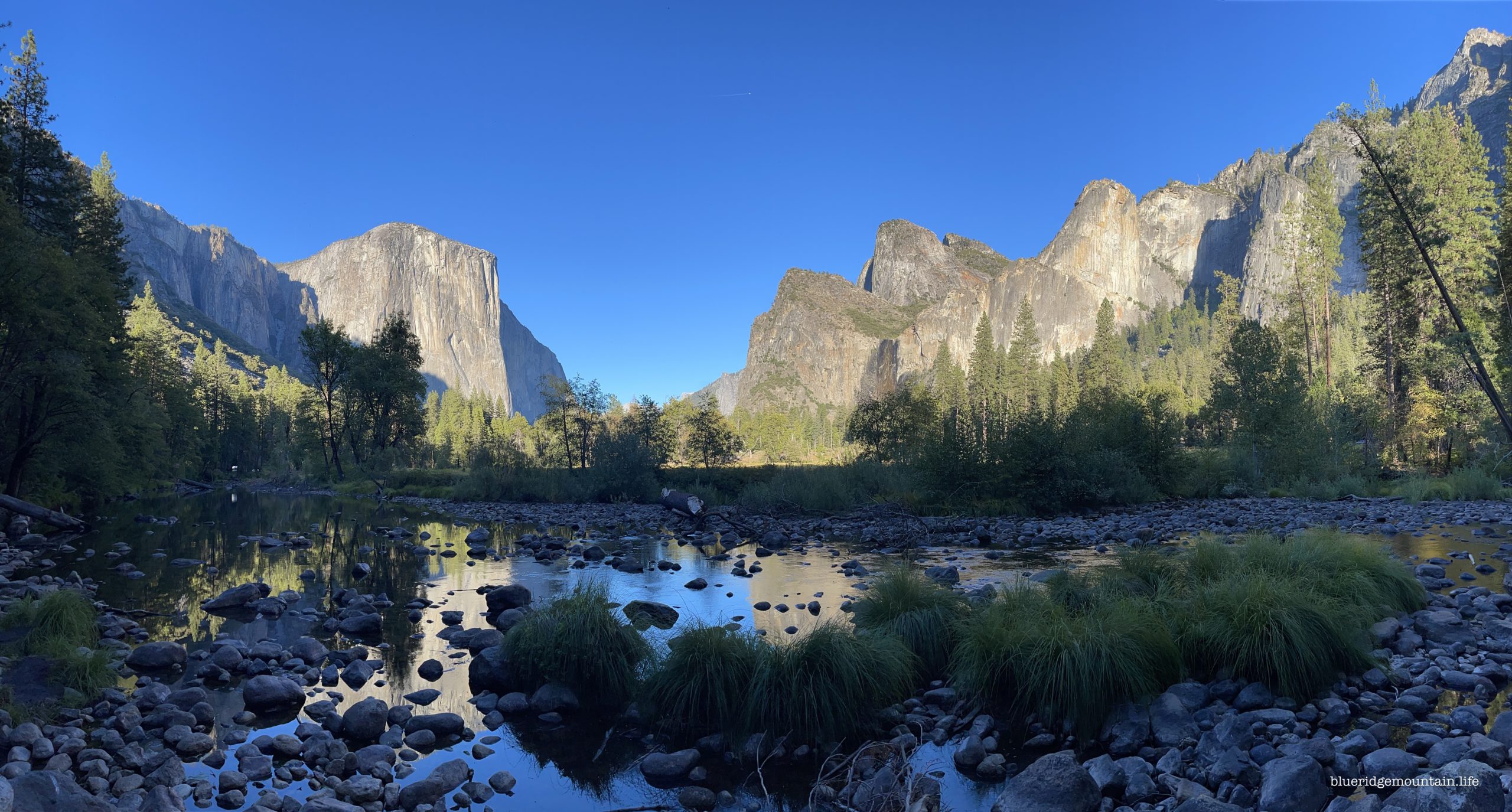
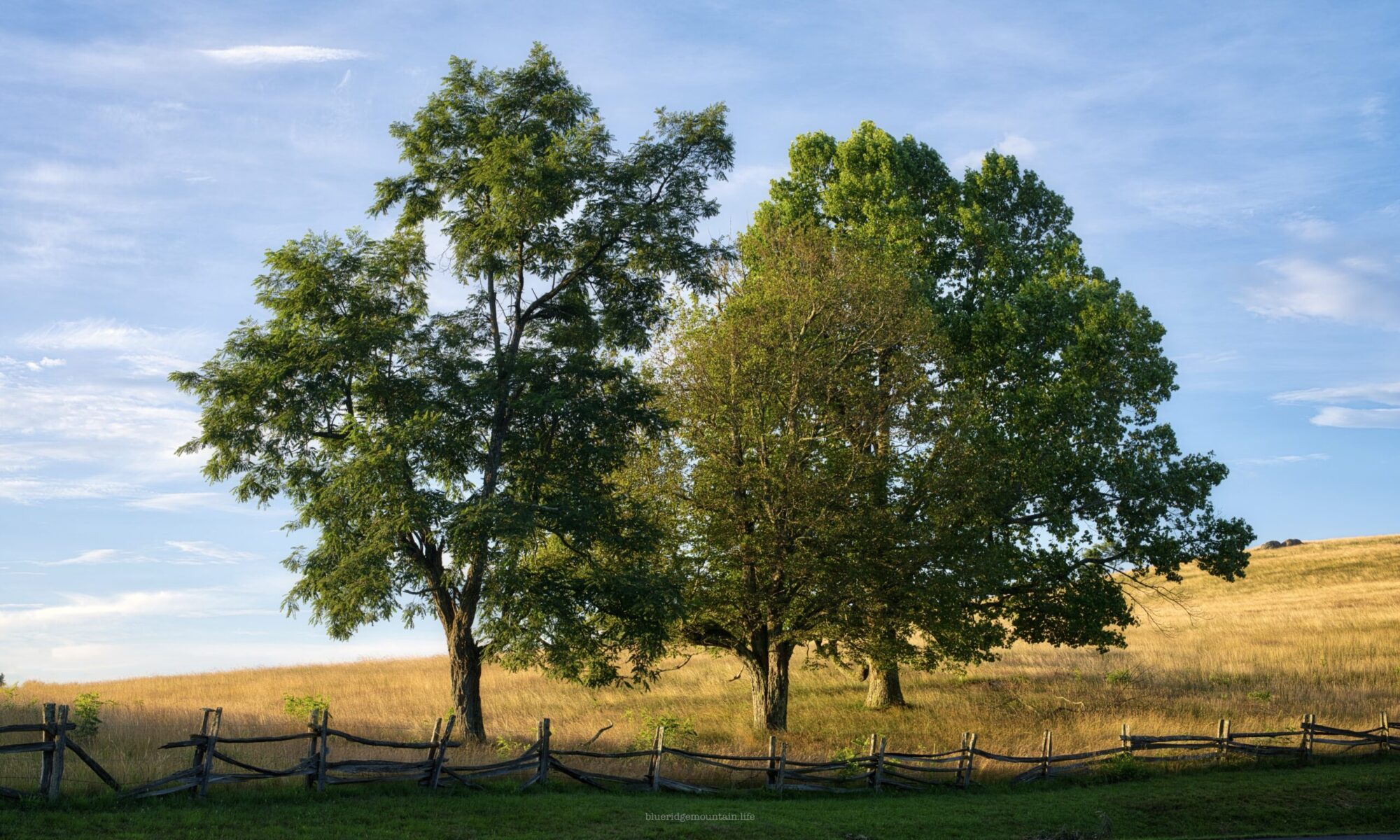
by blueridgemountain_man
God made a beautiful world for us to enjoy.
+++