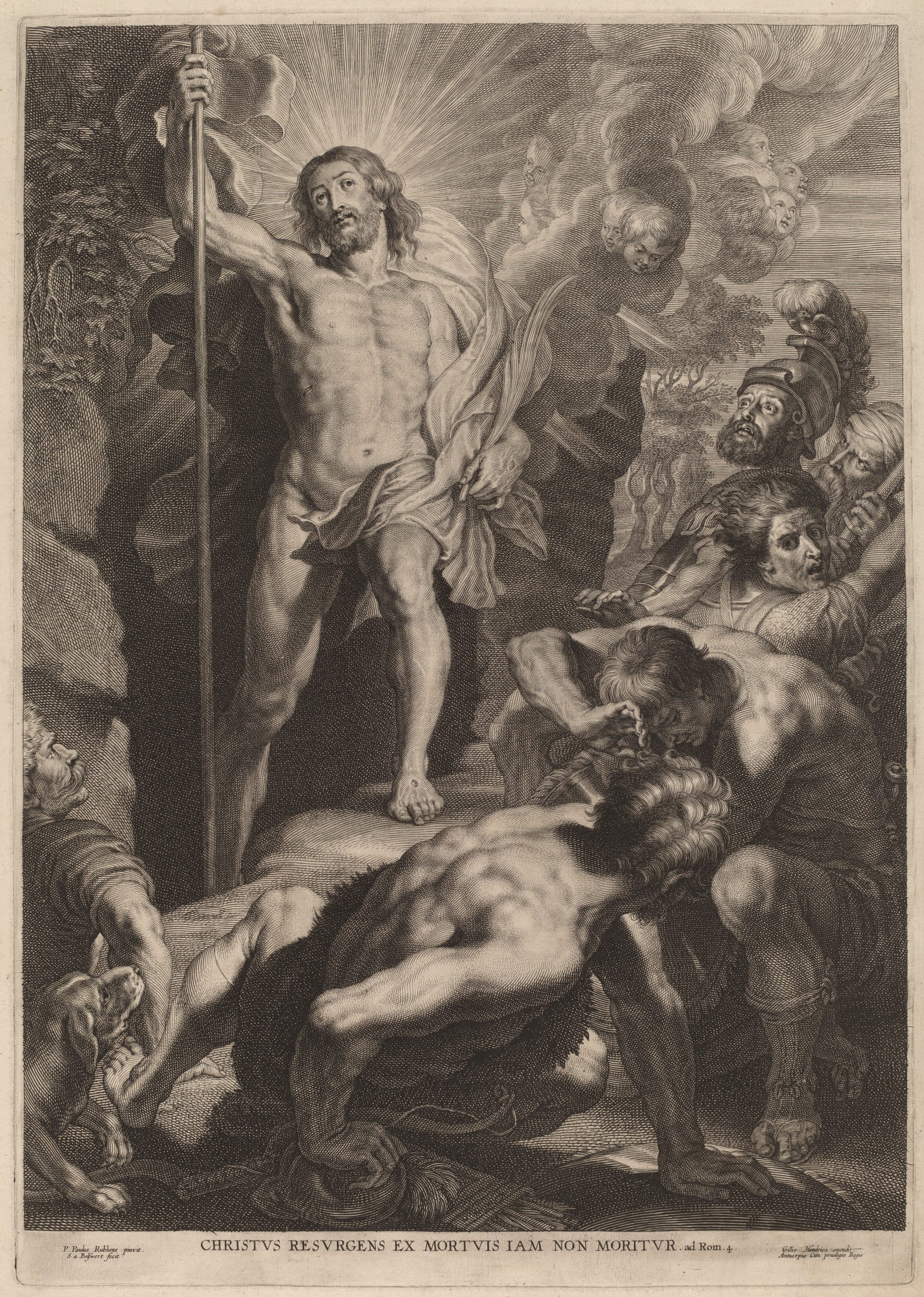
Resurrection, Renewal, and Living the Future Now

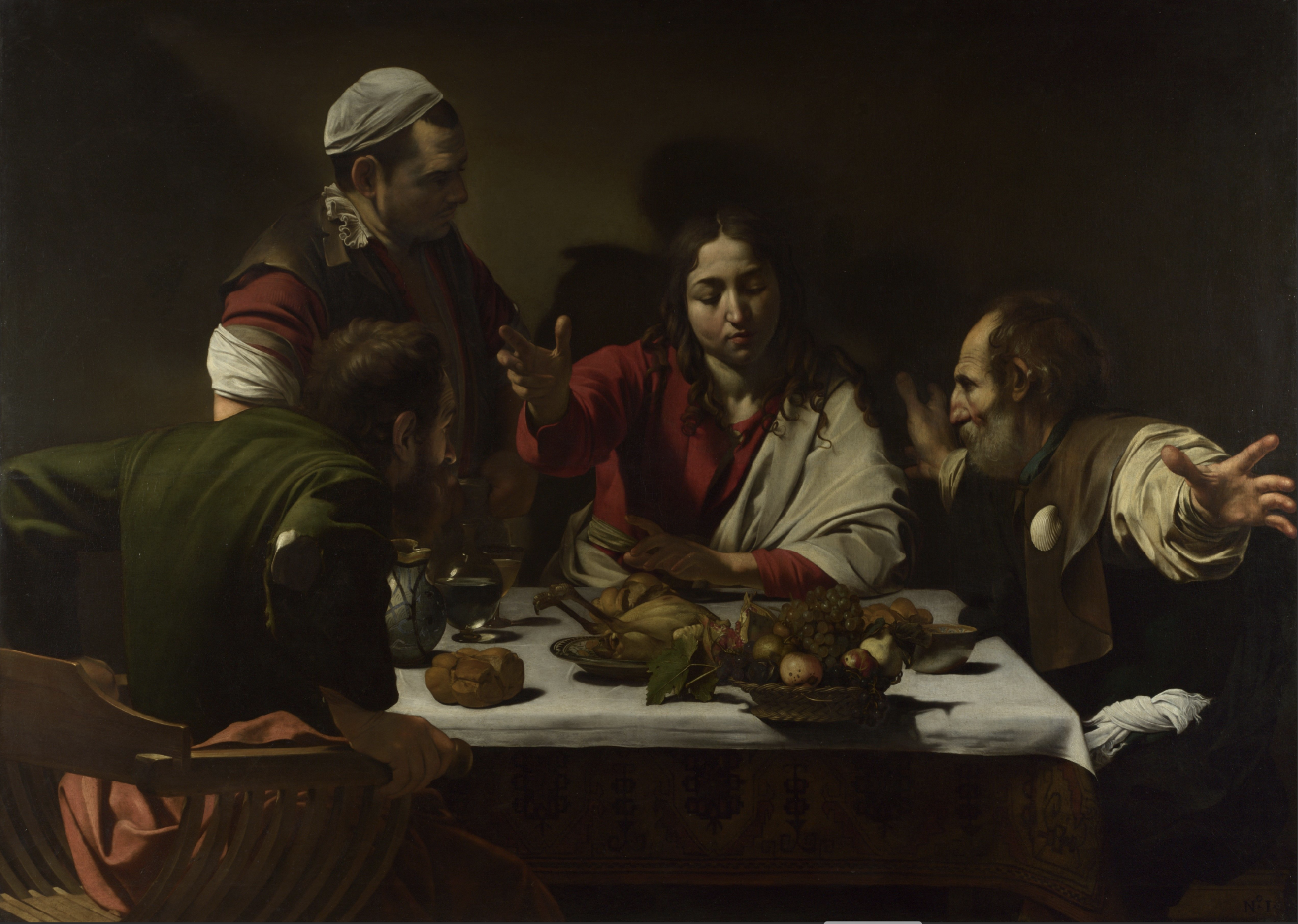
The Supper at Emmaus is a painting by the Italian Baroque master Caravaggio, completed in 1601, and now in London. It depicts the Gospel story of the resurrected Jesus’s appearance in Emmaus.

Audio Podcast

In the first episode, we challenged the idea that the Christian hope is simply about going to heaven.

In the second episode, we traced the biblical story from Eden to New Jerusalem (in other words, from the beginning of the Bible to the end of the Bible, where we noticed the ‘garden’ bookends of Scripture).  And we saw that God’s goal has always been to dwell with his people in a renewed creation.

Now, in this final episode, we turn to the question that inevitably follows:

If resurrection and new creation are our future, what difference does that make right now?

Because Christian hope is not meant to make us passive.

It is meant to make us faithful.

Resurrection Means the Body Matters
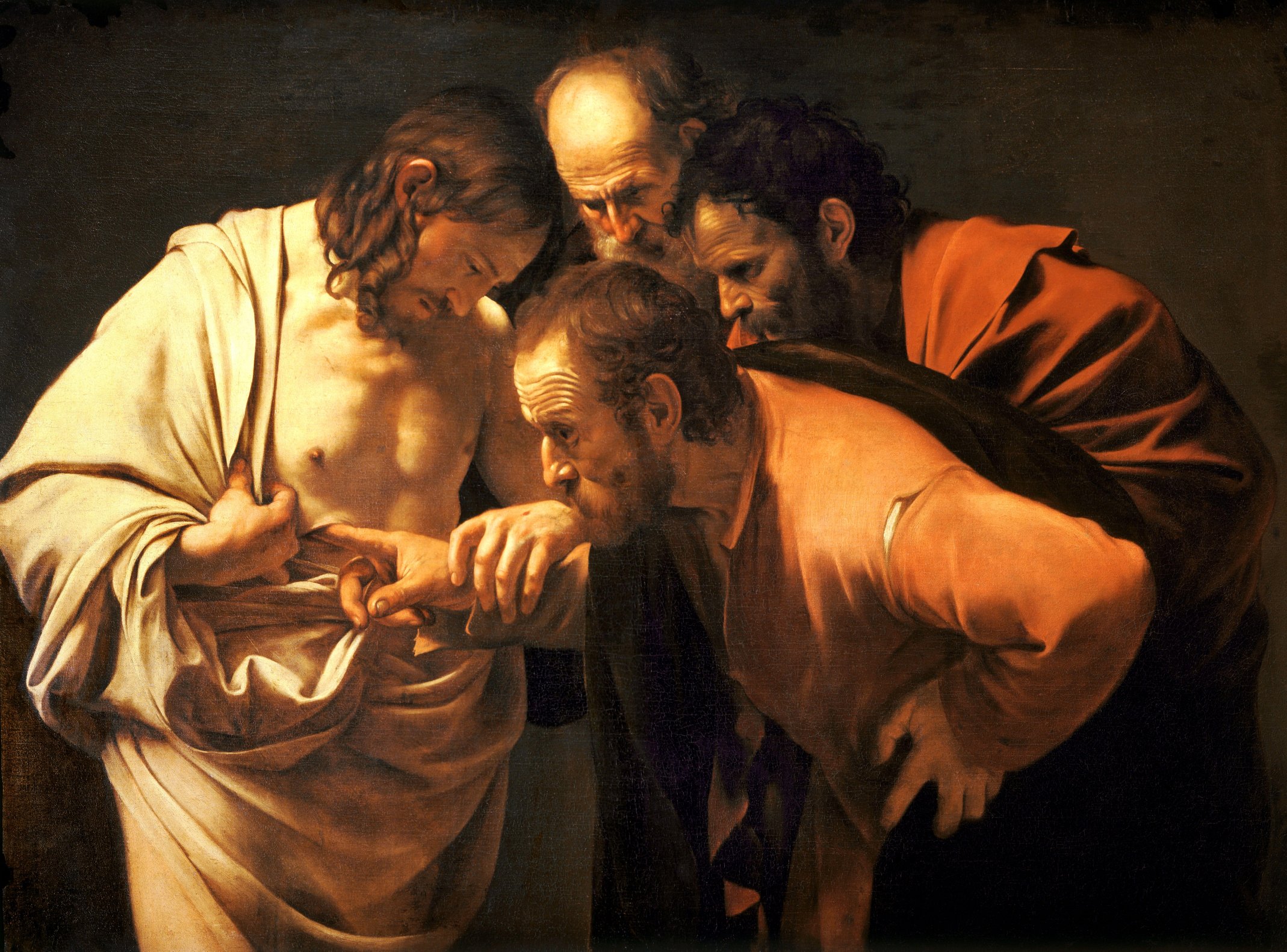
The Incredulity of Saint Thomas – c. 1602 – Caravaggio

Many people—Christians included—have absorbed the idea that the body is something we merely endure until we are finally free from it.

But that’s not Jesus, that’s not Paul, that’s  Plato, the Greek philosopher (400 years before Jesus), that’s Plutarch, a first century historian and young contemporary of Paul.  

But the New Testament never speaks that way.

Paul insists that resurrection is bodily—transformed and glorified, yes, but continuous with the life we live now.

In Philippians 3:21, Paul says that Christ will:

“transform our lowly body to be like his glorious body.”

Not replace it.

Not discard it.

Transform it.

If God intends to raise the body, then what we do in our bodies now matters.

Resurrection declares that the body is not an obstacle to holiness, or to being ‘spiritual’ (as some think), but a gift destined for in-dwelt glory.  In other words, God coming to dwell with us.

Creation Matters Because God Will Renew It

Again, In Romans 8, Paul tells us that all creation itself is groaning, and that its eagerly longing,—to be taken up to heaven with ‘saved souls’?  NO!  Creation is longing for release from the bondage of death, its enemy.  Our enemy.  

All creation waits, Paul says, for the revealing of the children of God.  For God’s children to fulfill the mandate given to them in the Garden.

That means Christian hope is not world-denying, and, to be more personal, it’s not body-denying.  Sadly today, there are a lot of people who deny the importance of the gift of our bodies, some, unfortunately, within the Church—whether its denying bodies in the womb or later the bodies we were given.  

We’ve even arrived at the point where some in our society, and sadly some in the Church, support the use of sex rejection therapy, medicine and surgeries.  That’s a very dark development. God help us as the Church to speak the Truth about who we were created to be.  

For our hope is not body denying.  It’s body-healing.  It is world-healing.  

What Christians do now—by the in-dwelt power of the Spirit—is not wasted. It is, in some mysterious way, taken up into God’s future ‘in Christ’ ‘in the Lord’.

Resurrection turns everyday faithfulness into embodied, eternal, significance.

Christian Work Is Not Meaningless

Paul concludes his great resurrection chapter with these words:

“Therefore, my beloved brothers and sisters,
be steadfast, immovable, always abounding in the work of the Lord,
knowing that in the Lord your labor is not in vain.”

1 Corinthian 15:58

Notice the logic.

Because resurrection is true, work is not wasted.  

That’s the context of this passage found here in THE RESURRECTION chapter of Scripture.  Our labor is not in vain.  

Faithful parenting, honest labor, quiet obedience, unseen service—none of it is lost.

The Christian life is not a temporary sketch to be thrown away.

It is a draft God intends to finish.

Suffering Is Real, but Not Final
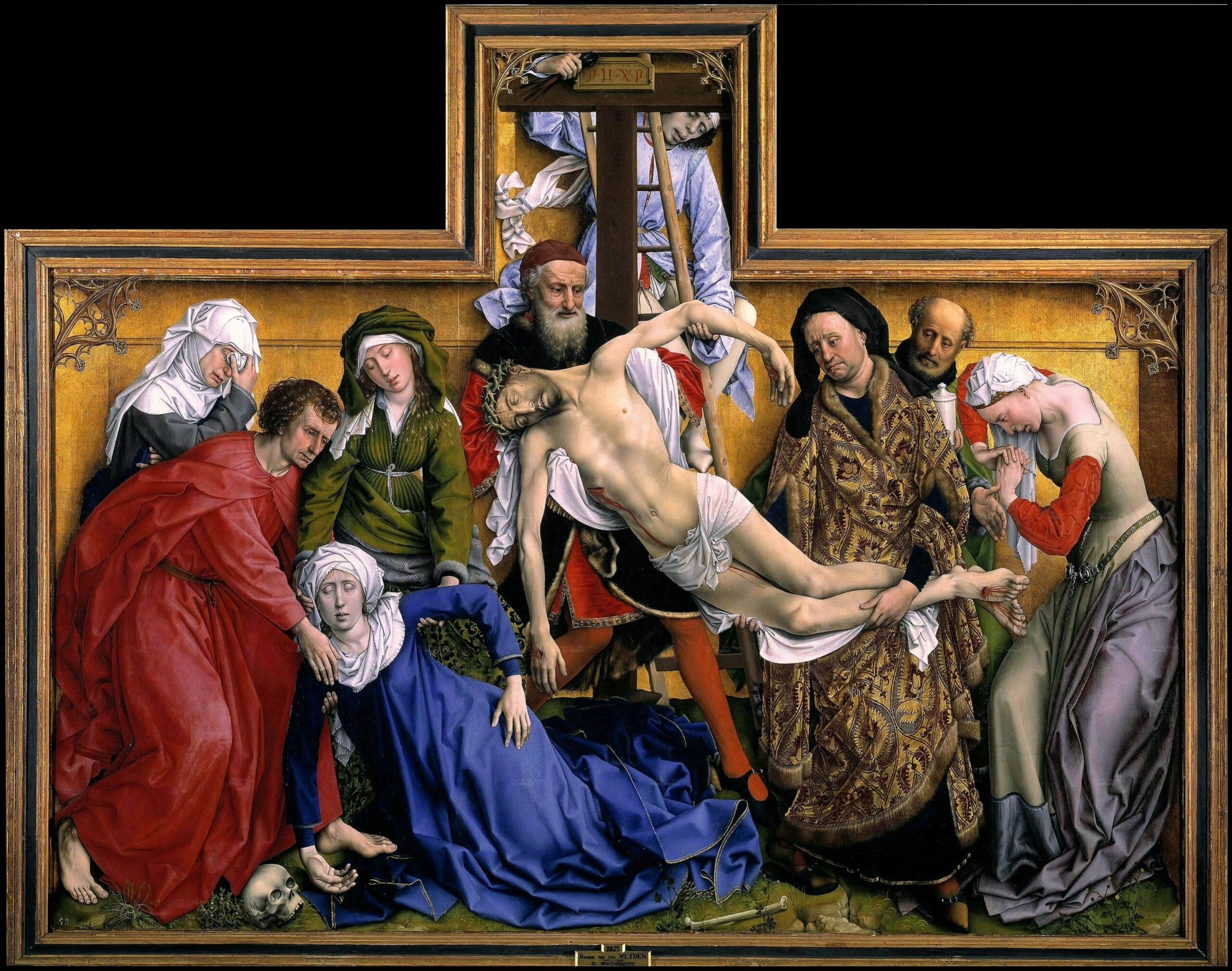
The Descent from the Cross – c 1435 – Van Der Weyden

And now we need to talk about something difficult and sometimes hard to understand.  Christian hope does not minimize suffering.

Paul never tells believers to pretend pain is unreal.

But he does insist that suffering is not the last word.

In Romans 8:18, Paul says:

“The sufferings of this present time are not worth comparing
with the glory that is to be revealed.”

Romans 8:18

This is not denial.  (You don’t know the Apostle Paul if you think he is in a state of denial here.)

It is defiance.

Resurrection hope allows Christians to grieve honestly without despairing finally.  We don’t grieve as other do, who have no hope.1“But we do not want you to be uninformed, brothers, about those who are asleep, that you may not grieve as others do who have no hope.” 1 Thess 4:13

Mission Is Participation in God’s Future

Jesus announces the kingdom of God not as a distant dream, but as a present reality breaking into the world.

When the church bears witness—through proclamation, mercy, justice, hospitality, and self-giving acts of love—it is participating ahead of time in the world God has promised.

So our Mission is not about evacuating souls.

It is about anticipating New Creation.

The church is called to be a sign, an instrument, a foretaste, and a tabernacling presence, of God’s future.

Living Between the Times

Of course, we Christians live between resurrection begun and resurrection completed.

We live in the overlap of the ages. (those ages are ‘the present evil age’2Gal 1:4—as many of us know all too well—and ‘the age to come.’3Eph 1:21; Heb 6:5)

That’s a primary dichotomy in scripture – not between spirit and matter – but between the present evil age and the age to come.

And that tension explains why:

  • death still hurts
  • creation still groans
  • faith still requires endurance

But it also explains why hope is possible.

Because the future has already begun in Christ.

A Different Way to Face Death

Christian hope does not treat death as a friend.

Death is an enemy—but a defeated one.

Christians grieve, of course, but not as those without hope.

Because death is not a destination.

It is a temporary interruption on the way to resurrection.

Living the Story

The Christian story does not end with souls escaping earth.

It ends with:

  • God coming down to dwell with humanity at the center of God’s bi-natured creation when heaven and earth are joined in holy matrimony.
  • The story ends with Creation renewed
  • And Resurrection completed

And that future reshapes the present.

Every act of faithfulness, every act of love, every act of obedience—done in Christ—participates in the world God is bringing.

Because the crucial move in Scripture is God coming down to us, NOT us going up to God.  So by God’s grace, let us prepare a place for God to dwell.

And live not as someone waiting to leave the world behind, but as someone learning to live in the light of the world to come.

Closing Benediction

May the God who raised Jesus from the dead fill you with hope through the power of the Holy Spirit.

May you live not as one waiting to escape the world, but as one shaped by the promise of resurrection.

And may the hope of new creation strengthen your faithfulness, deepen your love, and steady you until the day God makes all things new.

Amen.

Quotables

Resurrection Defines Christian Hope — N. T. Wright

“The early Christians did not believe in a future disembodied existence. They believed in resurrection — a new kind of bodily life after whatever interval there might be between death and that resurrection.”

— Surprised by Hope


The Body Matters — Wright

“What you do with your body in the present matters because God intends to raise that body in the future.”

— Surprised by Hope


Creation Renewed, Not Destroyed — Wright

“God’s plan is not to abandon this world, the world he said was ‘very good.’ God intends to remake it.”

— Surprised by Hope


Present Faithfulness Has Future Value — Wright

“What you do in the present — by painting, preaching, singing, sewing, praying, teaching, building hospitals, digging wells, campaigning for justice — will last into God’s future.”

— Surprised by Hope


Suffering and Hope — Wright

“Christian hope does not deny the darkness; it shines light precisely into it.”

— Surprised by Hope


Resurrection and God’s Dwelling Presence — G. K. Beale

“The resurrection of God’s people is the final stage in God’s plan to fill the entire creation with his dwelling presence.”

— A New Testament Biblical Theology


Death Defeated — Wright

“Death is the enemy. It is not part of God’s good creation, and it will be destroyed.”

— Surprised by Hope


“Therefore, my beloved brothers and sisters,
be steadfast, immovable, always abounding in the work of the Lord,
knowing that in the Lord your labor is not in vain.”

1 Corinthians 15:58

Podcast Resources

  • N. T. Wright, Surprised by Hope (Logos) (Amazon)
  • N. T. Wright, The Resurrection of the Son of God (Logos) (Amazon)
  • G. K. Beale, The Temple and the Church’s Mission (Logos) (Amazon)
  • G. K. Beale & Mitchell Kim, God Dwells Among Us (Logos) (Amazon)

+++

I welcome any questions or comments. [Don’t worry, your personal info will not be given to anyone.] Thanks!

From Eden to New Jerusalem: God’s Plan to Dwell with Humanity

Audio Podcast

In the last episode, we challenged a deeply ingrained assumption—that the Christian hope is ultimately about going to heaven.

In this episode, we widen the lens.

Because once you see the full biblical story, from Eden to Revelation, something remarkable becomes clear:

God’s plan was never escape from the world.

It was always about God dwelling with his people in that world.

To see that, we have to go back—not to Revelation—but to Genesis.

Eden Was Never Just a Garden

When many people picture Eden, they imagine a peaceful garden—pastoral, quiet, almost fragile.

But Scripture presents Eden as something far more charged.

Eden is not merely a garden.

It is the first sanctuary—the first place where heaven and earth overlap.

In the Ancient Near East people reading this Genesis 1 & 2 story or hearing this story recited would automatically think of a sanctuary, a temple.  A temple in the Ancient Near East (ANE) was where heaven and earth come together, it’s where the gods hang out—usually at the top of mountains in what’s typically described as a fertile garden.  The building of the temple was frequently described as a 7 day project and the last element of that temple construction was the placement of the image, in the inner sanctum of the temple, of the god being worshiped.    

That’s what we find in Genesis 1 & 2.  And any Ancient Near Eastern reader, or listener, would have recognized what was being reported here.

Eden is not merely a garden.

It is the first sanctuary—the first place where heaven and earth overlap.

Some other things that the Genesis story tells us is that humanity is placed in a world already filled with God’s presence. Adam is not simply a gardener. He is a priest-king.

Genesis 2:15 says that Adam is placed in the garden “to work it and keep it.” Those two verbs—to work and to keep—are later used almost exclusively in Scripture for priestly service in the tabernacle.

The picture is clear: humanity was created to live in God’s presence and to extend that presence outward.  Because Eden was not the whole planet.  Eden was a garden planted ‘in the East.’  Also, you’ll notice there were 4 rivers that flowed out of Eden to the planet beyond….

But Eden was never meant to remain small.

It was the starting point.

We get an important understanding of the full unfolding purpose of this creation story in the following passage of the first chapter:

Then God said, “Let us make man in our image, after our likeness. And let them have dominion over the fish of the sea and over the birds of the heavens and over the livestock and over all the earth and over every creeping thing that creeps on the earth.” So God created man in his own image, in the image of God he created him; male and female he created them. And God blessed them. And God said to them, “Be fruitful and multiply and fill the earth and subdue it, and have dominion over the fish of the sea and over the birds of the heavens and over every living thing that moves on the earth.”

And God said, “Behold, I have given you every plant yielding seed that is on the face of all the earth, and every tree with seed in its fruit. You shall have them for food. And to every beast of the earth and to every bird of the heavens and to everything that creeps on the earth, everything that has the breath of life, I have given every green plant for food.” And it was so. And God saw everything that he had made, and behold, it was very good. And there was evening and there was morning, the sixth day. (Genesis 1:26-31)

We need to highlight a few things from that passage.  Let’s start with the positive, the first commandment in scripture.  I love this: “Fill the earth with image bearers”.  In other words, make babies! The first commandment in scripture is for humans to have sex. And make more image bearers.

But now, here is the negative element of that mandate and it is summed up in the word “subdue”.   

The Hebrew letters transliterated are kbs (because ancient Hebrew does not have vowels, it’s hard to know how that word was pronounce, but we think it’s pronounced kabash)

If you do a word study of kabash/subdue, this is what you find:  There are thirteen verses in the OT.  The word means subjugate; violate, bring into bondage.  I’ve included a graph below with every translation of that word in the OT.

What does this tell us?  

Now you might assume that this early in the creation story being told, that things would be ‘pristine perfect’.  So why the need for such a word like ‘subdue’?  Outside of Eden there were forces to be brought into subjection to the Creator God by his image bearers. 

Now, if Adam and Eve were the first human image bearers created, what do you think this mandate and this word indicates?  Could it have something to do with the non-human rebel that would soon enter the story.  Was the serpent the only rebel to ‘subdue.’?

We won’t try to answer that today….but just note this, God’s unfolding purpose was to expand Eden, to expand his rule, to expand his sanctuary, his temple. 


But, then we come to the next chapter.  And the human rebellion.  

The Expansion That Failed

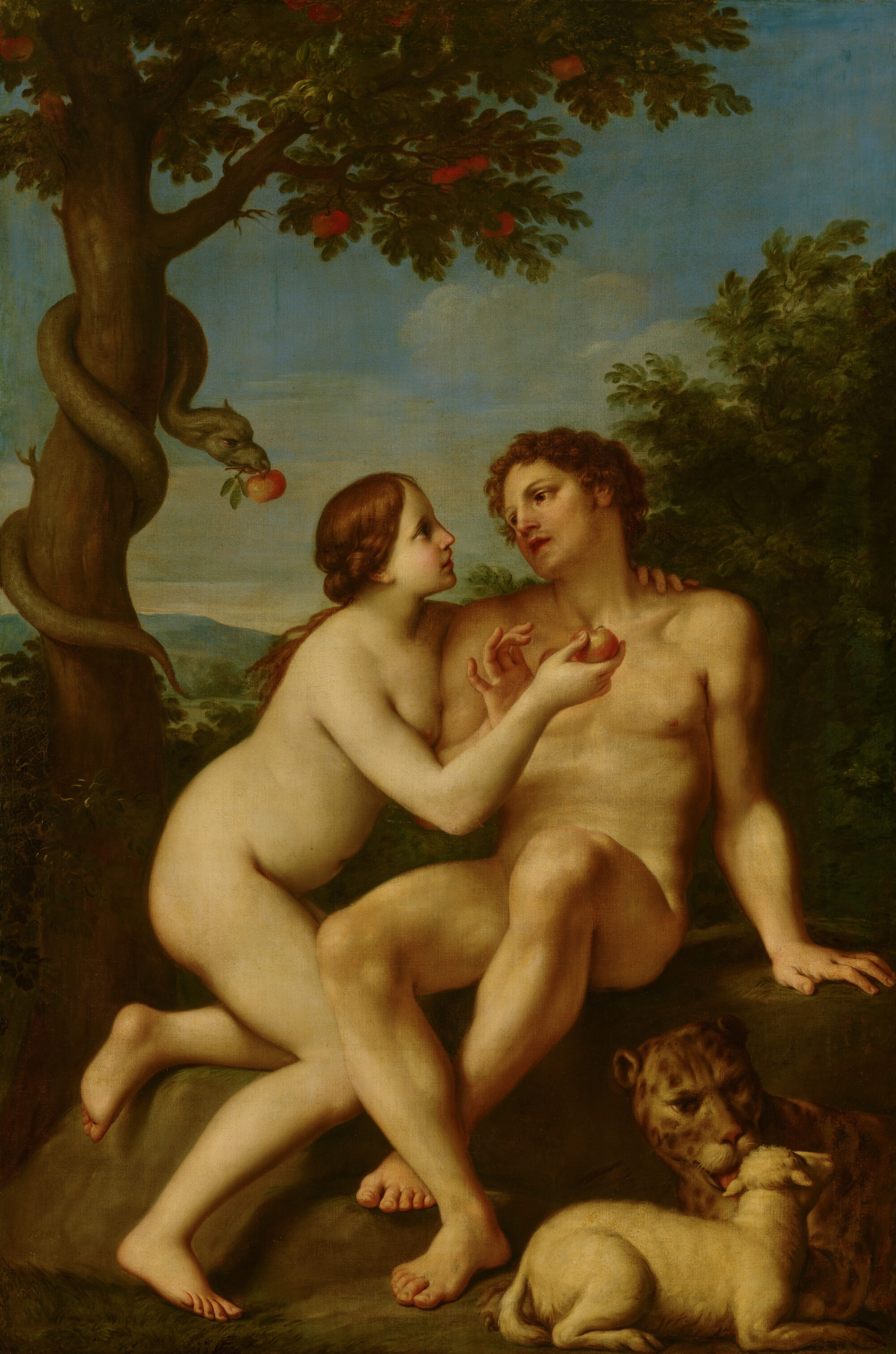
Adam and Eve – Marcantonio Franceschini, c. 1680 – Mauritshuis, The Hague.

Sin, in Genesis 3, does not cancel God’s plan for the cosmos.

But it does interrupt it.

Humanity is exiled from Eden—not because God abandons creation, but because God’s holy presence in His temple is dangerous to corrupted image-bearers.

What follows in Genesis 4 through 11 is not random chaos. It is a series of failed expansions.

Cain builds a city, but not for God.

Babel reaches upward, but on human terms.

Instead of God’s gracious presence filling the earth, violence and pride spread.  You know the story if you’ve read these early chapters of the Bible.

Sin doesn’t erase God’s purpose.

It fractures humanity’s ability to fulfill it.

God’s plan pauses—but it does not disappear.

Tabernacle and Temple: Eden Remixed

The Tabernacle Complex

The next part of the story we look at today is not the temple/sanctuary crafted by God, but by humans.  When God redeems Israel from Egypt, he does something extraordinary.

He does not simply give laws.  Those Laws were a means to an end.

Here is the purpose:  He says in Exodus 25:8:

“Let them make me a sanctuary, that I may dwell in their midst.”

The tabernacle, with all of its meticulous instructions to Moses at the end of Exodus, is Eden reintroduced—this time inside a fallen world.

The tabernacle imagery—based on how it was crafted—is unmistakable:

  • garden symbolism
  • cherubim
  • tree-like lampstands

In a future episode I will drill down into the details of how Eden-like the tabernacle was.

Also, its structure mirrors the cosmos, all of Creation:

  • the Holy of Holies symbolizes heaven
  • the Holy Place represents the visible heavens
  • the outer court corresponds to the earth

But we don’t have time to look at all of those details today.  I’m just letting you know that this is what bible scholars, both modern and ancient, will teach you if you dive deep into those details.

Let me just give one example here from N.T. Wright:  

“The detailed echoes between Genesis and Exodus, creation and Tabernacle, have been laid out in various ways (by many scholars), with obvious points such as the Menorah in the Tabernacle reflecting both the Tree of Life in Genesis 2 and the seven heavenly bodies in Genesis 1.” [N. T. Wright – History and Eschatology]

A lot of biblical scholarship has born this out:  The Tabernacle and later the Temple was a microcosm of the entire Creation.

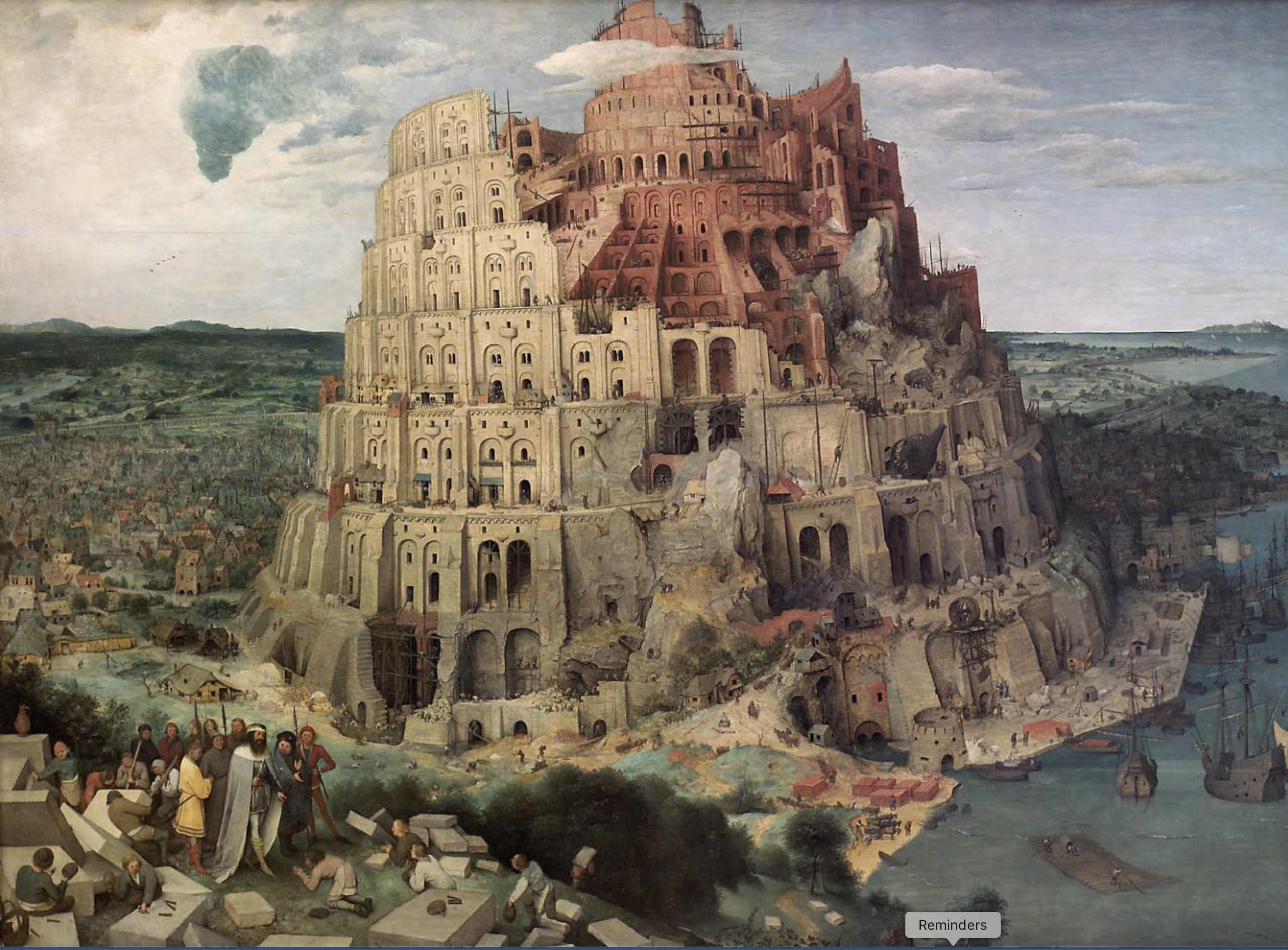
Here is a crucial point in this story.  The temple is not about Israel ascending to God. That was the tower of Babel approach.  


The Tower of Babel by Bruegel, Pieter the Elder, ca. 1563

It is about God choosing to come down and dwell with Israel.

Later in the story even Solomon, the great king, recognizes the tension, when he says:

“The heavens, even the highest heaven, cannot contain you.” (Yahweh)

Which tells us, the temple built by the Hebrews and, yes, sanctified by God’s presence, is a temporal signpost—not the destination.  God’s ultimate temple will be built by God, like Eden.  

Jesus as the True Temple

I told you this was going to be a brief overview, so we are going to fast forward to the Gospels. When we reach the Gospels, everything intensifies.

John tells us:

“The Word became flesh and dwelt among us.”1John 1:14  The word “dwelt” skenoo / eskenosen.

The word John uses literally means “tabernacled.”

Jesus does not merely visit sacred space.

He is sacred space.

When Jesus says to the Jewish authorities, “Destroy this temple, and in three days I will raise it up,” John explains (because the original hearers didn’t know what he was talking about) that:

“He was speaking about the temple of his body.”2John 2:19-21  

A temple, a body, that God created and would recreate.

Resurrection is not simply personal vindication. (Certainly it was that for Jesus.)

But equally, it is a New-Creation event.

The blueprint has become a living building.

The Church as the Expanding Temple

Now we move further out, to where we are.  After Jesus’ resurrection and ascension, the story accelerates.

Paul tells believers that they are:

“being built together into a dwelling place for God by the Spirit.”3see Ephesians 2:19-22

Peter calls Christians “living stones.”4you yourselves like living stones are being built up as a spiritual house…(1 Peter 2:5)

The point is not that the church replaces the temple.

The point is that the temple is expanding. (The original mandate, remember?)

God’s dwelling presence is no longer localized.

It spreads—through witness, suffering, obedience, and love.

Revelation 21–22: Eden Finally Expanded

And now let’s talk about the future.  At the end of Scripture, John sees:

“a new heaven and a new earth.”

Then he sees the New Jerusalem (a garden city) read the text carefully, because just like Eden, the Tree of Life is there.  The River of Life is there  And that city is “coming down out of heaven from God.”


(Rev 21:2) And I saw the holy city, new Jerusalem, coming down out of heaven from God, prepared as a bride adorned for her husband. And I heard a loud voice from the throne saying, “Behold, the dwelling place of God is with man. He will dwell with them, and they will be his people, and God himself will be with them as their God.

He will wipe away every tear from their eyes, and death shall be no more, neither shall there be mourning, nor crying, nor pain anymore, for the former things have passed away.” 

5 And he who was seated on the throne said, “Behold, I am making all things new.”

(Rev 21:10) And [one of the seven angels] carried me away in the Spirit to a great, high mountain, and showed me the holy city Jerusalem coming down out of heaven from God,

The next chapter continues the vision.

(Rev 22:1) Then the angel showed me the river of the water of life, bright as crystal, flowing from the throne of God and of the Lamb through the middle of the street of the city; also, on either side of the river, the tree of life with its twelve kinds of fruit, yielding its fruit each month. The leaves of the tree were for the healing of the nations. No longer will there be anything accursed, but the throne of God and of the Lamb will be in it, and his servants will worship him.


Crucially, John says:

“I saw no temple in the city, for its temple is the Lord God Almighty and the Lamb.”

This does not mean there is no temple.

It means everything has become the temple.

Eden is no longer a just a garden.

It is a garden-city.

And the city fills the world.

God’s presence, once localized, now saturates all creation.  Just as the prophets Isaiah5Isa 11:9 and Habbakuk said it would:  

For the earth will be filled with the knowledge of the glory of the Lord as the waters cover the sea.6Habakkuk 2:14

This is what was promised in Psalm 72.18-19 as well…

Blessed by YHWH, the God of Israel, who alone does wondrous things. Blessed be his glorious name for ever; may his glory fill the whole earth. Amen and Amen.

Psalm 72:18-19

The first Adam failed in that task.  The ‘last Adam’ got the project back on track and now here in the final book of the Bible, we see the unfolding purpose fulfilled.  

Why This Matters

Now, all of this is not abstract theology.

Because, if God intends to dwell with humanity in a renewed creation, then:

  • bodies matter
  • work matters
  • creation, all of it, matters

Christian hope is not about abandonment.

It is about restoration.

How Should We Then Live

In the final episode, we turn to the question this raises for daily life.

If resurrection and new creation are the destination, how should Christians live now?

Because once you understand where the story is going, it changes how you live in the present.

+++

Quotables

Eden as the First Temple — G. K. Beale

“The Garden of Eden was the first temple in which God dwelt and where humanity served as priestly guardians of sacred space.”

— The Temple and the Church’s Mission


Eden Meant to Expand — Beale

“Adam’s commission in Eden was not merely to preserve the garden, but to extend its boundaries until the whole earth was filled with God’s glorious presence.”

— The Temple and the Church’s Mission


Sin as Exile — Beale

“Human sin resulted in exile from God’s dwelling place, a pattern that later repeats itself in Israel’s exile from the temple and the land.”

— God Dwells Among Us


Temple as Cosmic Model — Beale

“Israel’s temple was designed to symbolize the entire cosmos, with God’s throne room at its center.”

— The Temple and the Church’s Mission


Jesus as the True Temple — Beale

“Jesus Christ is the true temple in whom God’s presence dwells fully and permanently.”

— The Temple and the Church’s Mission


The Church as the Expanding Temple — Beale

“The church is not a replacement for the temple but the means by which the temple expands throughout the world.”

— God Dwells Among Us


New Creation as the Final Temple — Beale

“In Revelation 21–22, the entire new creation becomes the Holy of Holies, filled with God’s immediate presence.”

— The Temple and the Church’s Mission


“Behold, the dwelling place of God is with man.
He will dwell with them, and they will be his people.”

Revelation 21:3

+++

I welcome any questions or comments. [Don’t worry, your personal info will not be given to anyone.] Thanks!

Why “Going to Heaven” Is Not the End of the Story

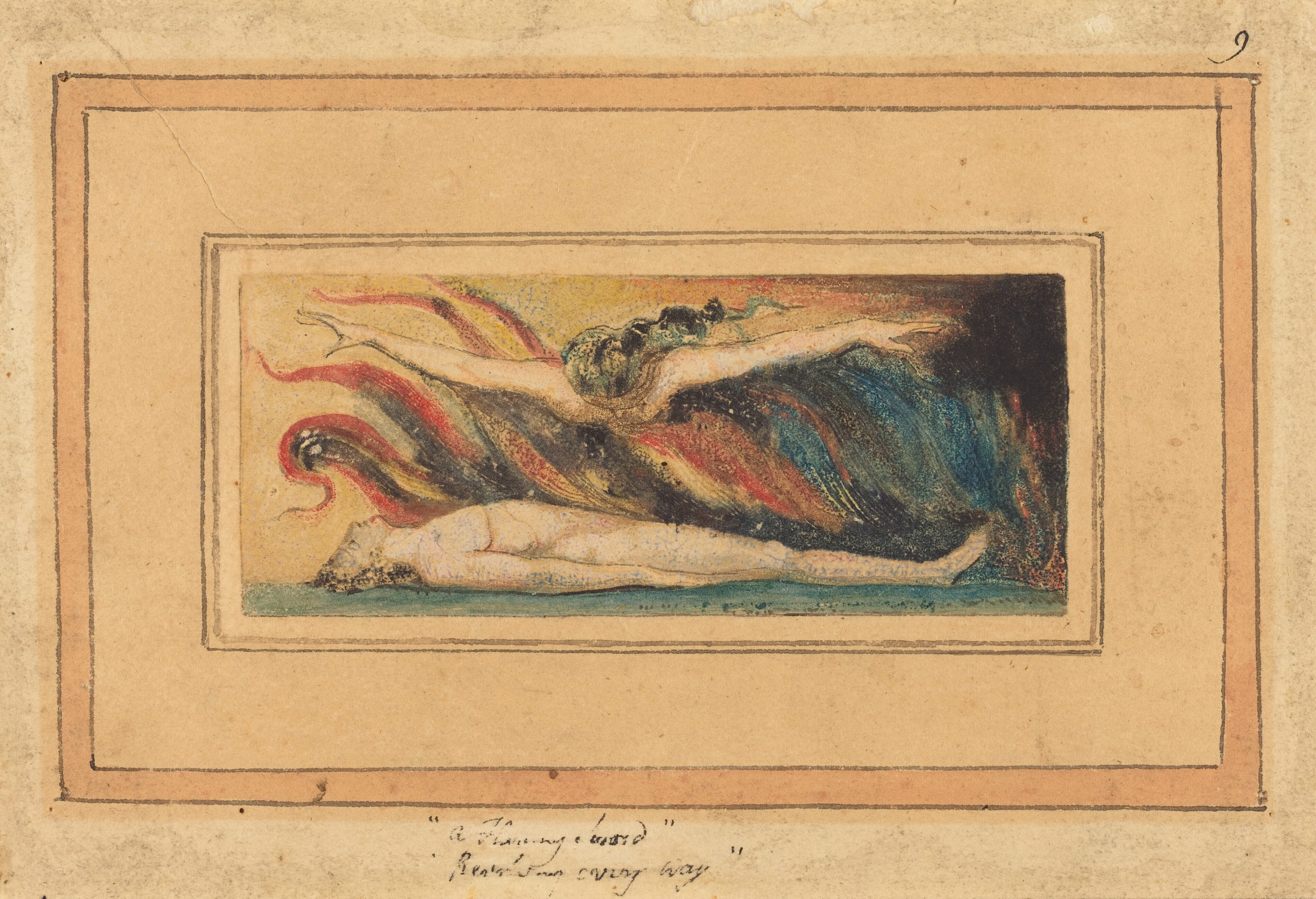
The Soul hovering over the Body – William Blake

Audio Podcast

The Ultimate Hope?

Most Christians, if asked about their ultimate hope, would answer something like this:

“When I die, I’ll go to heaven.”

And in one sense, that answer isn’t wrong.

The New Testament does speak about believers being “with Christ” after death. It speaks of comfort, rest, and joy in God’s presence.

But here’s the problem:

That answer is incomplete.

And when it becomes the whole answer, it quietly distorts the Christian hope.

In this episode, I want to suggest something that may feel surprising—even unsettling at first:

Heaven is not the end of the Christian story. It is real. It matters. (God created it, after all….that’s right, heaven was created too.)

But it is not the final destination.

The Question We’ve Been Asking

For generations, Christians have been taught—often unintentionally—to ask the wrong question.

The question we’ve learned to ask is:

“How do I get to heaven when I die?”

But that is not the central question Scripture is asking.

The Bible’s great question is:

What is God going to do with his creation?

When you follow Scripture from beginning to end—from Genesis to Revelation—you discover that the Bible is not primarily about escaping the world.

It is about God redeeming, renewing, and restoring what he has created..

As N. T. Wright puts it, the idea of “going to heaven” functions as shorthand for something temporary, not ultimate.

The difference between temporary and final is crucial.

What Happens When Christians Die?

Before we go any further, we need to be clear.

Neither N. T. Wright nor G. K. Beale, the two theologians I refer to in this series, deny that believers are with God after death.

They believe that.  I believe that.

Scripture, after all, is explicit on this point.

Paul writes in Philippians 1:23:

“My desire is to depart and be with Christ, for that is far better.”

And in 2 Corinthians 5:8:

“We would rather be away from the body and at home with the Lord.”

So yes—Christians who die are with Christ.

But notice what Paul does not say.

He never says: this is the final hope.  (Read all of his letters, you won’t find him saying that).

Instead, Paul consistently points beyond this intermediate state to something still future.

Wright summarizes this with a memorable distinction:

There is life after death—and then there is life after life after death. In other words….It’s a two stage process.

The first stage refers to being with Christ at death.

The second refers to bodily resurrection.

And resurrection—not heaven—is the centerpiece of Christian hope.

Resurrection Is Not Optional


If you want to know what the earliest Christians believed about the future, you don’t start with Revelation.

You start with 1 Corinthians 15.  Where…

Paul does not treat resurrection as a metaphor.

He does not treat it as poetry.

He treats it as non-negotiable.

He says in 1 Corinthians chapter 15 verse 14:

“If Christ has not been raised, then our preaching is in vain and your faith is in vain.”

And again in verse 20:

“But in fact Christ has been raised from the dead, the firstfruits of those who have fallen asleep.”

“Firstfruits” implies more to come. (That would be us)

Resurrection is not about floating souls.

It is about embodied life restored and transformed.

Paul goes even further in verse 26:

“The last enemy to be destroyed is death.”

Now.  If death were the gateway to our final destiny, Paul would not call it an enemy.  

I’ve experienced the death of people that I love, perhaps you have too, and in my case, after they suffered long illnesses, and in a sense there is ‘release’ at that point, but we should never call death our friend, for it is our enemy.

Let me put it this way…..

Death is defeated not by escape—but by resurrection. 

Since, in the biblical story, it is the body that dies, if the body is not raised, then death has not been defeated.  That’s the description of death. At death, the soul, the invisible part of our nature, is separated from our visible nature, our bodies. 

But if the invisible and the visible are not rejoined, then death has not been defeated.  It’s just been described

Again, the separation of body from soul is the definition of death, not its defeat.  If the body is not raised.  More particularly, if Jesus’s body was not raised (which is Paul’s primary point) then our faith is in vain.  Our enemy has triumphed.   

Why “Going to Heaven” Shrinks the Story

When Christians collapse their hope into “going to heaven,” several things happen.

First, the material or visible creation becomes disposable.

Why care for the world, the world of space, time and matter, if it’s all going to be “left behind?”  (Perhaps you’ve heard that ‘popular phrase.’)1From Tim LaHaye’s Left Behind book series

Second, the body becomes secondary.

Why does embodiment matter if our future is disembodied? (Some Christians think that our destiny as humans is to become angelic.  That’s incorrect.  More about that later.)

Third, our mission gets reduced to evacuation.

“Save souls. Get em out of here, successfully.  That’s our mission.”  So we’re told….

But the Bible tells a different story.

In Romans 8, Paul says that the whole creation itself is groaning—not for annihilation, but for renewal.  Let me read that full very important passage:

For I consider that the sufferings of this present time are not worth comparing with the glory that is to be revealed to us. 19 For the creation waits with eager longing for the revealing of the children of God. 20 For the creation was subjected to futility, not willingly, but because of him who subjected it, in hope 21 that the creation itself will be set free from its bondage to corruption and obtain the freedom of the glory of the children of God. 22 For we know that the whole creation has been groaning together in the pains of childbirth until now. 23 And not only the creation, but we ourselves, who have the firstfruits (there’s that word again) of the Spirit, [we] groan inwardly as we wait eagerly for adoption, the redemption of our bodies. 24 For in this hope we were saved.

Rom 8:18-24


Paul is not talking about existence in ‘heaven’ as our hope.  But the renewal of all creation, the creation that had been given over to corruption, to death, most personally, our bodies.  

Creation waits with eager longing, Paul says, for “the revealing of the children of God.”

It’s not waiting for escape.

It’s waiting for restoration.

Think about it….The whole creation, the living beings on this planet, are yearning, longing for what?  To be taken up into heaven with the souls of believers? 

NO!  That’s not the plan. 

They are longing for the children of God to take their rightful place as loving overseers, vice-regents of this world of space, time and matter.  As imagers of God.  That’s what they are longing for.  That was the original plan2And God blessed them. And God said to them, “Be fruitful and multiply and fill the earth and subdue it, and have dominion over the fish of the sea and over the birds of the heavens and over every living thing that moves on the earth.”, after all, and God has not changed his mind.  

Setting Up the Bigger Story

So here’s where we are at the end of Episode 1.

Heaven is real. But, let’s not forget, or let us learn anew, heaven was created too.  That’s what it says at the beginning of the story: “In the beginning, God created the heaven’s and the earth…..”  It’s a bi-natured creation.

We’ve also learned that….

Being with Christ after death matters.

But it is not the end of the story.

And finally, the Christian hope is not that we leave earth behind.  “This place is not my home…many say.…I’m just a passin’ through.”  Actually, that’s not true.  It’s not biblical.  

The most widely quoted verse in scripture is “for God so loved the world, that he gave his only begotten son..”.3John 3:16 The greek word translated “world” here is kosmos which doesn’t mean humans only, but the whole of creation.  God loves all of it.  

Sometimes I get the impression, though it may not be their intent, that certain ministers are really saying that “God so HATED the world that he gave his only begotten son…”.

But that, again, is not the biblical story.


In the next episode we will learn more about the Christian hope.

Here is a brief summary:

  • Heaven and earth will be joined
  • God will come down and dwell with humanity
  • And all Creation will be made new

We’ll go all the way back to Eden and follow the biblical story forward—briefly—through temple, exile, Jesus, and finally new creation.

Because once you see that story clearly, you’ll never read the Bible—or your own future—or the future of God’s good creation, the same way again.

Assumptions Challenged

If this episode challenged assumptions you’ve carried for years, that’s okay.  I carried many of those same assumptions until I was taught the bigger story.

The Christian hope is bigger than many of us were ever taught.

And that’s good news.

Quotables

N. T. Wright — Heaven Is Not the Final Destination

“Heaven is important, but it is not the end of the world. In fact, it is not the end of anything. It is the beginning of a new world.”

— Surprised by Hope


Life After Death vs. Life After Life After Death

“Life after death is a real and wonderful thing. But it is not the Christian’s final hope. The final hope is the resurrection of the body and the life of the world to come.”

— Surprised by Hope


Resurrection as the Center

“Resurrection does not mean life after death. It means life after life after death.”

— Surprised by Hope


Death as the Enemy

“If death were the final state God intended for human beings, it would not be described as ‘the last enemy.’ Death is an intruder, not a friend.”

— Surprised by Hope


G. K. Beale — God’s Goal

“God’s original purpose was to fill the entire earth with his glorious presence.”

— The Temple and the Church’s Mission


“Behold, the dwelling place of God is with man.
He will dwell with them, and they will be his people.”

Revelation 21:3

Podcast Resources

  • N. T. Wright, Surprised by Hope (Logos) (Amazon)
  • N. T. Wright, The Resurrection of the Son of God (Logos) (Amazon)
  • G. K. Beale, The Temple and the Church’s Mission (Logos) (Amazon)
  • G. K. Beale & Mitchell Kim, God Dwells Among Us (Logos) (Amazon)

+++

I welcome any questions or comments. [Don’t worry, your personal info will not be given to anyone.] Thanks!