

[This podcast is for all my Christian brothers and sisters. Especially those who attend churches that have been seduced by gender ideology.]
Welcome back to the Podcast. I’m glad you’re here with me today. We’re tackling a big cultural question—the growing obsession with what can be called the promise of disembodiment. That’s the idea that our bodies don’t matter, that they’re just clay to be reshaped, husks to be discarded, or even obstacles to the “real” self.
And here’s the spoiler: it’s a lie. A very old lie dressed up in new clothes.
Today, I want to walk with you through this lie, why it’s so appealing, and why the Christian vision of the body offers a much more beautiful, hopeful truth.
Naming the Lie
The cultural signs are everywhere. Abortion framed as a right to bodily “autonomy.” Gender ideology claiming male and female are optional. Assisted suicide presented as dignity. Even futuristic fantasies of uploading our minds into machines. (Yeah, there are some technologists out there that are presenting that as a possibility.)
All of these share the same root assumption: the body doesn’t matter.
Liel Leibovitz, writing recently in First Things, puts it bluntly:
“Those of us who know that we were created in God’s image have no choice but to acknowledge our bodies, those awkward earthly vessels that matter and cannot be manipulated as if they were raw material for our disembodied wills.”
That’s exactly it. Either the body is a gift with meaning—or it’s just raw material, something to use, discard, or redefine.
And when we lose the sense of the sacredness of the body, Leibovitz warns,
“Take away this belief in the sacred character of the body and it becomes not a temple but a speed bump.”
A speed bump. Something in the way. Something to get past. That’s the lie we’re facing.
Why the Lie Is Attractive
Let’s be honest—this lie is appealing because it promises freedom. If my body doesn’t matter, then I can do whatever I want with it. I can erase biological sex. I can evade the consequences of sex. I can even reject life itself if it doesn’t feel worth living.
But this so-called freedom is actually a prison. Leibovitz writes:
“When you do away with the sanctity of the body, you invite tyranny, because you are no longer bound to acknowledge what is real, only what is willed.”
If all that matters is my will, then whoever has the strongest will gets to impose their version of “reality.” And that’s not freedom—that’s bondage.
The Christian Response
Here’s where Christianity gives us something radically different.
The very first chapter of the Bible declares:
“So God created man in his own image, in the image of God he created him; male and female he created them” (Gen. 1:27).
Jesus himself reaffirms this in Matthew 19:4: “Have you not read that he who created them from the beginning made them male and female?”
The Apostle Paul drives it home: “Do you not know that your bodies are temples of the Holy Spirit, who is in you…? You are not your own; you were bought at a price. Therefore honor God with your bodies” (1 Cor. 6:19–20).
The Christian response to the lie of disembodiment is simple but profound: your body matters. It’s not a mistake. It’s not an accident. It’s not raw clay for you to remake. It is God’s creation, God’s gift, and God’s temple.
Why This Matters Today
This isn’t just theory. It affects the way we live right now.
- Children are told they can “change” their sex.
- The elderly are told their lives are no longer worth living.
- The unborn are treated as disposable tissue.
- And technology dangles the fantasy of living without flesh at all.
But Christians know better. As Leibovitz reminds us:
“The rejection of the body is the rejection of limits, and the rejection of limits is the rejection of responsibility. And where responsibility vanishes, so does love.”
That’s the key. Love requires limits. Love requires responsibility. Love requires embodiment.
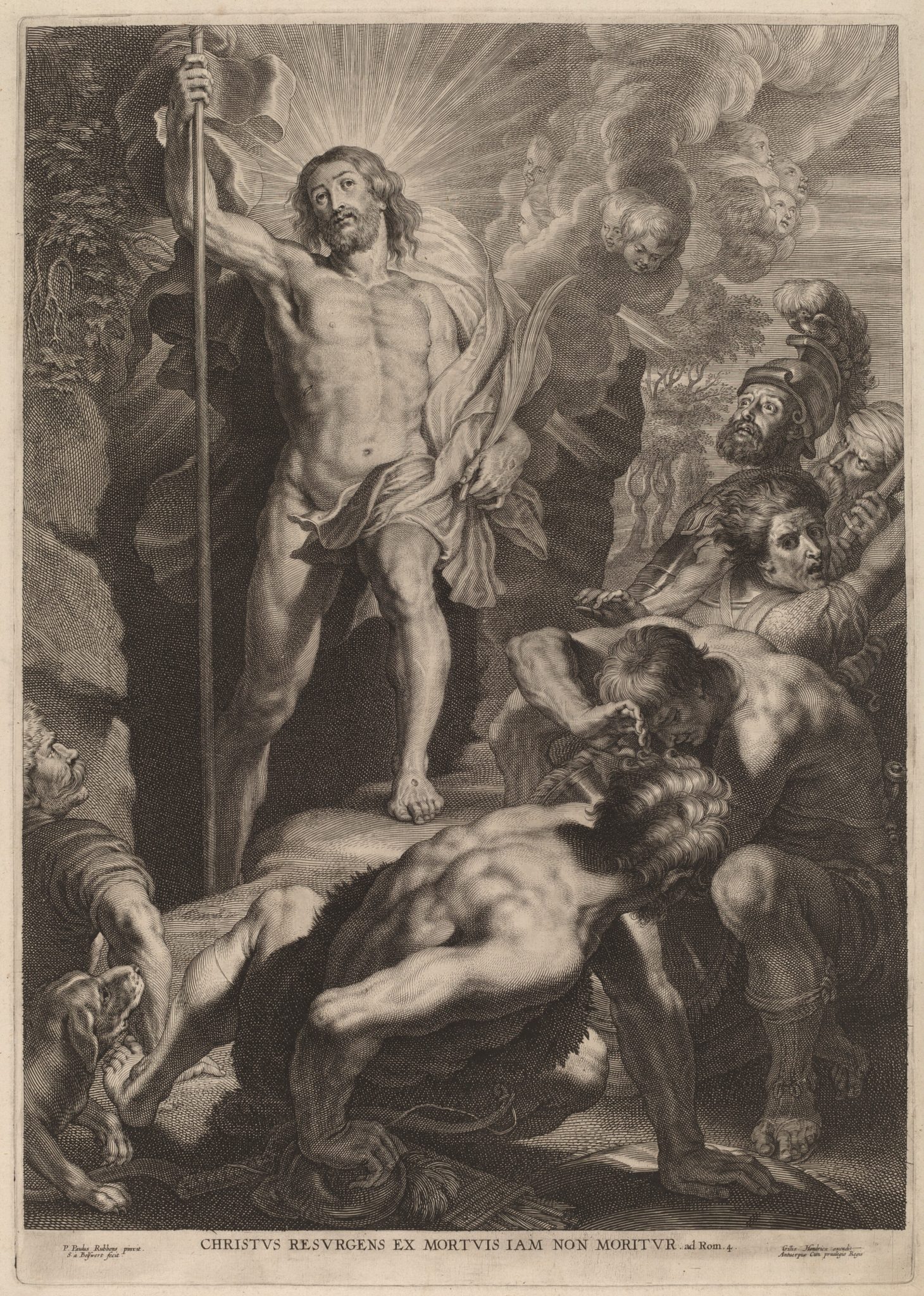
Think about it: Christ didn’t love us from afar. He took on flesh. He bore our sins in his body. He rose bodily from the grave. Real love shows up in the flesh.
It is no good to say: “Be warmed, be filled, go in peace” to the poor person (James 2:15-16). You gotta give them a cloak. You gotta give them food. That’s what it means to love your neighbor.
The True Promise
So what’s the alternative to the lie?
It’s not escape. It’s not disembodiment. It’s resurrection.
The gospel promises that these very bodies—frail, weak, mortal—will be redeemed. Paul writes in Romans 8:23 that we await “the redemption of our bodies.” Christ himself is the guarantee, the firstfruits of the resurrection.
So, no, we don’t hope for disembodiment. We don’t hope for escape. We hope for restoration, fulfillment, resurrection glory.
Friends, the promise of disembodiment is a lie. It sounds like freedom, but it ends in alienation and death. The true promise is this: your body matters. God made it, Christ redeemed it, and the Spirit indwells it.
So let’s live that truth with courage and joy. Let’s reject the lie. And let’s proclaim to the world: our hope is not to leave the body behind—but to rise with it, made new, forever.
Thanks for joining me today on the Podcast. Until next time, remember—your body is a temple, and your destiny is resurrection.
+++
Celebrate God’s Good Creation