
***
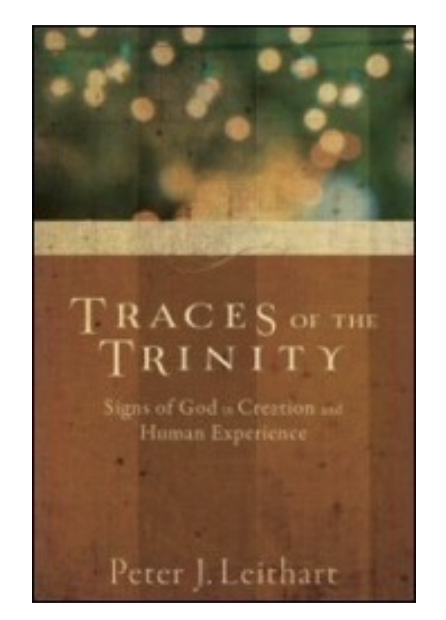
Welcome back to this podcast series where we are uncovering, Traces of the Trinity. So far, we’ve peered into our bodies, our families, our loves, our sense of time — all to see how the world hums with hints of mutual indwelling, of the Triune God’s signature everywhere.
Today, we tackle something that wraps around all of that — language. Not just grammar drills and spelling tests — but language as a living sign of how the world itself works. This is Chapter 5 of Leithart’s book: Word in Word in World.
***
Language is weird. It’s so familiar, we forget how strange it is. Little squiggles on a page, vibrations in the air — somehow they pass thoughts from my mind into yours. Or do they?
Leithart starts by poking that idea. He says — maybe we’ve asked the wrong question all along. Are words just tiny packages that move ideas from one head to another, like digital files? Or do they do more than carry meaning — do they create meaning?
***
Think about it. Plato and Aristotle thought spoken words were closer to thought than written ones. A spoken word was the living breath of the thinker. But a written word? Just a mark on a page — a ghost of the living voice. Once you scribble it down, you lose control of it.
Yet here we are — thousands of years later — still reading Plato’s ghost words. Somehow, the ideas still come through. How?
***
Leithart says the clue is this: language is never just words. It’s words in the world — and the world in the words.
You yell “Duck!” when a baseball flies off course. You’re not just passing a thought. You’re trying to move a body — to get someone to bend their knees and dodge. The word isn’t a fact to file away — it’s an action that changes the world.
***
And it goes deeper. Words reshape the world — but the world also shapes words.
Think about nicknames. Or local slang. Or that family phrase only your siblings get. Language isn’t just a static list of labels. It’s a living web of meanings, stories, mistakes, jokes, memories — words that contain other words, histories that echo inside each phrase.
When you say “White House,” you don’t mean the building alone — you mean the whole government it stands for. That’s called metonymy — one thing standing in for something bigger. But that only works because we know the history behind it. The world inhabits the word.
***
Or think about metaphor. Metaphor isn’t just fancy speech for poets. It’s how we think. “Life is a journey.” “Time is money.” “Argument is war.” These aren’t just decorative flourishes — they’re the mental handles we grab to navigate life.
Language layers word upon word. Meaning curls into meaning. Each phrase is a Möbius strip — an inside and an outside that twist into each other.

***
Leithart pushes it even further. He says — this tangled pattern is not just about words but about world.
Words don’t stand apart from the world, looking in. Words are in the world — and the world is inside our words. When you name something — a swan, a rock, a friend — you reshape how you see it, touch it, even live with it. Words are like little worlds that contain pieces of the bigger world.
***
And the Trinity? That’s the shape echoing again. Words dwell in other words. The world dwells in the word. The word dwells in the world. It’s perichoresis — mutual indwelling — in grammar, poetry, politics, and everyday speech.
***
Leithart gives examples from literature. Shakespeare’s lines live inside our speech. Phrases from Hamlet (“to be or not to be”), Macbeth (“something wicked this way comes!” OR a “wild goose chase” & “it’s all Greek to me”) — these lines echo through new books, new jokes, new memes. Words nest inside words. Texts dwell inside texts.
And this isn’t just literary trivia (Alex, I’ll take literary trivia for 400 please) — it’s how meaning happens at all. Without older words, new words have nowhere to live. Without a bigger world, words have nothing to point at. And without words, we can’t even see the world clearly.
***
Here’s the kicker: language is never just labels stuck on things. It’s how we join with the world. How we act on it. How we let it act on us.
When Augustine asked how we can learn anything new through language, he puzzled: if you need to know something to understand the word, how does the word teach you anything? Augustine’s answer: ultimately, God teaches the mind from the inside.
Leithart says — yes, but don’t miss this: language also teaches from the outside. Words pour the world into us. Marks on paper pull dead philosophers or playwrights back to life (that’s all Greek to me!). A single word can unlock a new part of your world.
***
So here’s the takeaway: language is a sign of the Trinity because it’s a dance of difference and union. Words are distinct — each means something unique — but they only work because they indwell each other.
Sense and sound. History and meaning. World and word. They live in one another — and we live inside that swirl every time we speak.
***
Next time you shout “Duck!” or whisper “I love you” or read a text from a friend — remember: you’re not just swapping info. You’re tracing the shape of something deeper. A world stitched together by words. Words stitched together by the world.
And maybe — just maybe — all this chatter points back to the divine Word that was with God and was God, the Word through whom all worlds were made.
Next episode, we’ll tune our ears to another clue — music. If words are swirling hints of the Trinity — what about sound itself? Until then — listen well, speak carefully, and keep your mind open to the hidden music of word in word in world.
The Trinity leaves fingerprints on every inch of creation.
***
Next Episode (6) – Chords.
I welcome any questions or comments. [Don’t worry, your personal info will not be given to anyone.] Thanks!