
***
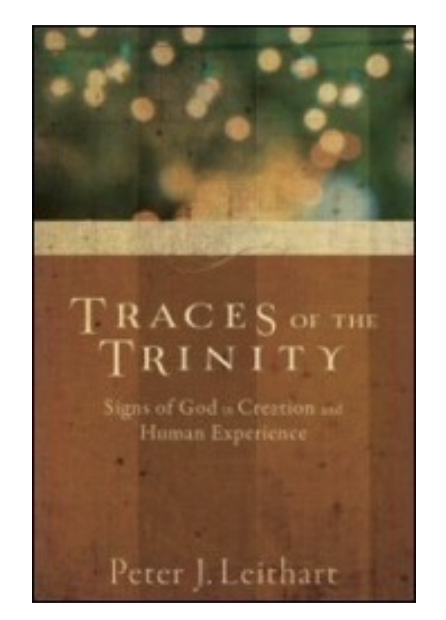
Hey friends — welcome back to the podcast about Traces of the Trinity. So far, we’ve explored how the world’s very fabric hints at a pattern of mutual indwelling — from our bodies and relationships to language, time, and music.
The following paragraph in Chapter 7 of Leithart’s book summarizes where we’ve been.
“Everywhere, at every terrace along the way, we’ve found that the landscape has familiar features: Things are irreducibly different. Things cannot exist at all unless they are distinct from other things. At the same time, these irreducibly different things mysteriously inhabit one another, pass into and out of one another, penetrate even as they are penetrated, envelop the very same things that envelop them. And we have found that, while things cannot be at all without being irreducibly distinct, they also cannot be at all without this mutual penetration. I can’t exist unless the world I inhabit comes to dwell within me. I cannot have relationships with another person, most especially those whom I love, unless we pass into one another. Time exists only because past and present and future ineffably and simultaneously take up residence in each other. Words don’t mean unless they occupy other words and are open enough to be occupied. Each note of music is different, but each note is what it is because other sounds resound through the sound it makes.”
Traces of the Trinity – ch 7
Now today, in Chapter 7: Making Room, Peter Leithart poses the question: if this is how the world is — then how should we live?
This chapter shifts us from how things are to how we ought to act. From the indicative to the imperative.
***
Ethics. It’s a big word. We often think rules will save us: Do this, don’t do that. Others say it’s about your heart — good motives, good life. Still others say, “Just pay attention to the situation.”
Leithart says: it’s not either/or — it’s all of it. Right rules, right motives, real situations — they must dwell in each other, just like the world’s shape.
Rules alone? They break. Situations alone? Chaos. Motives alone? They can justify just about anything.
***
He gives an example: “Love your neighbor as yourself” — but who’s your neighbor? “Don’t covet your neighbor’s wife or his house or his cattle,” Yahweh thundered from Sinai, but, Leithart says: “you need to see a marriage certificate and a bill of sale to know what woman, house, and cattle are off-limits. You can’t even use a rule unless you know something about the situation, since rules always have to be applied to a real world that is always in the form of a particular situation.”
Rules demand real-world context.
Situations demand principles to steer them. And motives shape how we follow rules in situations. If they don’t swirl together, we miss the point.
Mutual indwelling — in ethics too. The pattern holds.
***
But Christian ethics isn’t just about rules and motives — it’s about love. And here’s where Leithart’s theme shines: to love is to make room. To open yourself for others, to be changed by them, to let them dwell in you — even when it’s inconvenient.
We know this in our bones. Marriage is making room. Parenting is making room — radically so. That new baby doesn’t ask permission to occupy your nights, your house, your sleep. They dwell in you — literally at first, if you’re a mother, then in your heart, your mind, your calendar.
***
But making room isn’t easy. Selfishness locks the door. The father who hides in his work. The mother who closes her heart. The spouse who builds walls. The child who rebels because there’s no space left for them to belong.
Leithart says: when we refuse to make room, we cut against the grain of reality. The grain of reality is love — mutual indwelling.
***
He gives everyday images: your coworker interrupts your plan. That stubborn violinist in the orchestra resists the conductor. A boss burdens your free time. Our instinct? Push back. Defend our fortress.
But Gabriel Marcel says true love is availability. To be available is to see these interruptions as opportunities for mutual dwelling. A chance to open space — and to enter someone else’s space too.
This applies to the stranger on the street, the neighbor who annoys you, the addict who shows up in your church. True hospitality isn’t approval of everything — it’s welcome that invites change. We open our lives so the other can be clothed, fed, healed, discipled.
We make room to transform.
Think of the good Samaritan. He didn’t step over the broken man. He made room in his plans, his wallet, his donkey saddle. He made the injured man’s wounds his own burden.
That’s love. Love makes room.
***
Families that flourish do this well. They make room for each other’s quirks, needs, mistakes. They open the door wider when new kids come, when elderly parents move in, when neighbors knock.
Neighborhoods, cities, nations — the pattern is the same. Leithart says: the world must open. When communities barricade, they become fortresses — tribal camps at odds with each other.
Mutual indwelling becomes mutual hostility when we refuse to make room.
***
But real love doesn’t mean we accept everything as-is. We don’t welcome the hungry so they stay hungry. We don’t open our doors to the broken so they remain broken. True hospitality hopes for change — for renewal. We make room for the sake of redemption. And to echo the words of Jesus: this requires discipleship training into the loving ways of our Creator.
The pattern we’ve been studying holds: just as music weaves distinct notes into one chord, just as language stitches words into worlds — so love weaves lives together.
***
So, friends — where are you closed off? Who’s knocking at the door of your time, your heart, your home?
Where could you risk making room?
Because when we do — when we open ourselves to dwell and be dwelled in — we align our lives with the deepest shape of the world: the shape of Triune love.
Next time, we’ll wrap this up by looking at the final turn in Leithart’s climb — what kind of mind we need to see the world this way.
Until then — may you have the courage to open the door, and the grace to welcome what — and who — waits outside.
The Trinity leaves fingerprints on every inch of creation.
***
Next – The Supple Imagination – Episode 8
I welcome any questions or comments. [Don’t worry, your personal info will not be given to anyone.] Thanks!