
***
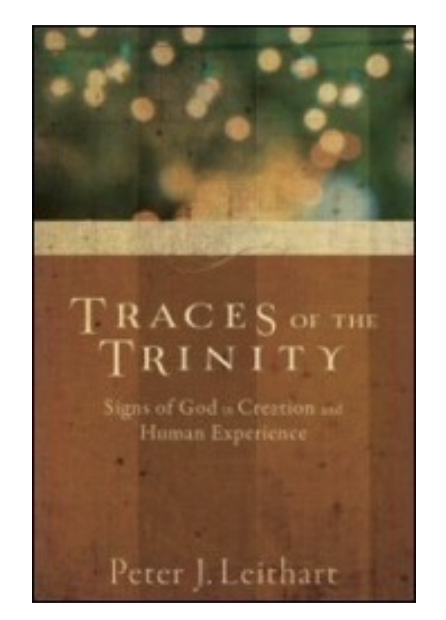
Hey friends — welcome back to the podcast about Traces of the Trinity.
If you’re just jumping in — here’s your heads up: this episode steps into the realm of love, bodies, sex — and how all that messy, beautiful stuff actually whispers a deeper pattern about reality. So buckle up — this might get awkward. Or it might just be the best thing you hear all week.
Today, we open up Peter Leithart’s Chapter 3 —I Am His, He Is Mine.
***
When we talk about sex in our modern world, it often gets sliced up two ways. Some people crack open an anatomy book — describing all the moving parts. Others — poets, lovers, mystics — reach for a different language. They use metaphor, music, laughter, blushes.
Leithart says — the poets are onto something. Because when a man and woman become “one flesh,” as Genesis says, they do something far more mysterious than biology alone can explain.
***
Think about it: for centuries, lovers have reached for poetry to describe what happens in sex. Shakespeare called it the “beast with two backs.” Andrew Marvell spoke of rolling all strength and sweetness up into one ball. William Blake asked what men and women truly want — and he answered: “The lineaments of Gratified Desire.”
It’s not just earthy poets. Mystics — Christian, Jewish, Eastern — often turn to the same language when trying to describe what it means to long for God. Song of Songs paints a picture of human lovers — but beneath that heat and longing is a deeper ache: the soul longing for the divine.
***
Karl Barth — the Swiss theologian — said that the difference between male and female is the part of humanity that most deeply reflects God. Because in that difference — and in their union — we glimpse a hint of the Trinity’s life: difference without division, unity without erasure.
The old word for that is perichoresis — mutual indwelling.
***
And here’s the bold claim: sex is not just physical release. It’s not just pleasure or “exchanging fluids,” as the clinical talk goes. It’s not just biology. It’s a sign — a sign that actually does what it points to.
When a man and woman come together, they quite literally enter one another’s lives — bodies first, but hearts too. He wraps his arms around her; she folds herself into him. They breathe together, kiss together — two becoming one, yet remaining two.
***
Leithart goes deeper. Think about a kiss — just a kiss. Not just a peck on the cheek — but an open-mouth, breath-sharing kiss. It’s intimate, invasive, mutual. Your lips touch. Your breath mingles. You taste each other. You’re sharing life at the gateway of the body.
The mouth is a door — things go in: food, drink, air. Things come out: words, songs, sighs, laughter. The mouth is a threshold where what’s inside becomes outside — and what’s outside becomes inside.
A kiss, then, is a small version of what happens in sex: a mutual opening, a giving and receiving, a little liturgy of indwelling.
***
Now, some might say: “Hold on — that’s just animal stuff. Birds do it, bees do it. Even educated fleas do it.”1Hat tip to song writer Cole Porter But humans are not just animals. We blush. We hide. We veil. We make it private. We wrap sex in poetry, vows, laughter, tears.
Animals don’t write love songs. They don’t close the bedroom door. They don’t feel shame.
That shame points to something bigger: that our sexuality is not just about pleasure — but about communion, about self-gift, about vulnerability that echoes the mystery of our Creator.
***
Leithart reminds us — this union is also the way the world gets peopled. No other human act is so intimately unitive and so profoundly creative. Other pleasures don’t make new life. But this one can — and does.
Through mutual indwelling, two become one — and out of that oneness, a third can come into being. A new person, born from the overflow of mutual gift.
***
But the point isn’t just babies. It’s that the pattern is baked into the act itself — bodies are designed to fit together. It’s not an accident. It’s gift, echo, hint. It’s a physical sign of a deeper reality: that true love wants not just pleasure — but to dwell inside and be dwelled in.
Romantic love wants more than bodies pressed together — it wants stories woven together. It wants a life shared, a world reshaped by a vow.
***
Leithart says: lovers don’t just merge bodies — they merge narratives. He tells how when you fall in love, your life story rewrites itself around the other. Your past, your dreams, your friendships — they all get re-colored. The beach where you honeymooned. The restaurant where you first confessed you were in love. These places get wrapped up in the shared story.
And if you’ve ever lost a spouse, or watched someone grieve — you know it’s true. When one partner dies, it’s like losing a piece of yourself. Because that other person was part of you.
***
Of course, there’s a dark side too. This longing for indwelling can twist into domination. Love can curdle into possession — one person devouring another’s identity. It’s the tragic side of romance: instead of a dance, it becomes control.
True love holds the tension: mutual giving without erasing the other. Lovers “ingest” without “digesting” — they remain themselves, but they dwell in one another, too.
***
So, why does this matter for Leithart’s bigger argument? Because it’s yet another trace. Another clue that the world is stitched together with a triune shape.
Sex is more than sex. It’s a signpost, a sacrament — a bodily icon that points us back to the One whose very life is mutual indwelling, self-gift, other-receiving. Father in Son, Son in Father, both in Spirit.

So the next time the world tries to reduce sex to a transaction or just biology — pause. Remember that blush. Remember the veil. Remember the poetry.
Remember that you are built for more — your body testifies that love was always meant to be mutual self-gift. A little earthly echo of a cosmic dance.
***
Next time, we’ll see how this pattern doesn’t stop with lovers. It shapes our sense of time — and even the way we speak and think. But for now, maybe take a moment to remember the gift of bodies, the mystery of desire, the wonder that when we say I am his, he is mine — we’re pointing to something deeper than flesh.
Until next time — keep your eyes open for the traces. They’re everywhere, even in the most private places.
The Trinity leaves fingerprints on every inch of creation.
+++
4: The Presence of the Past – (Episode 4)
I welcome any questions or comments. [Don’t worry, your personal info will not be given to anyone.] Thanks!