Traces of the Trinity: Outside In, Inside Out

Peter Leithart – Ph.D. University of Cambridge

I encourage you to read as you listen.  There are footnotes along the way defining unfamiliar words and providing some context for those who want to go a little deeper. (just click)

Traces of the Trinity – Outside In, Inside Out – Episode 1

***

Welcome back to the podcast, today we are looking at Traces of the Trinity. If you’re just joining us — no worries. This episode stands on its own, but feel free to catch the teaser we did on the preface whenever you’d like.

So — today we’re stepping into Chapter 1 of Peter Leithart’s book, which he calls Outside In, Inside Out. And just like the title hints — this chapter is all about that fuzzy line between you and everything else.

+++

Let’s start simple. Look around. What’s near you? A desk, a mug, a window, a tree outside? Leithart does this too — he talks about his computer, his books, the couch he naps on, his daughter practicing piano in the next room. It’s all stuff. And in the middle of that stuff — is you.

Now, we’re used to thinking there’s a clean border between “me” and the “world.” Modern people inherited that mental map from René Descartes1René Descartes (1596–1650) was a French philosopher, mathematician, and scientist widely regarded as the father of modern philosophy. Seeking certainty in knowledge, he developed the method of systematic doubt, famously concluding “Cogito, ergo sum” (“I think, therefore I am”) as an indubitable foundation for philosophy. Descartes made major contributions to mathematics, including the creation of analytic geometry, which linked algebra and geometry. In metaphysics, he argued for mind–body dualism, distinguishing between thinking substance (res cogitans) and extended substance (res extensa). His most influential works include Discourse on the Method, Meditations on First Philosophy, and Principles of Philosophy. Descartes’ thought profoundly shaped modern philosophy, science, and rationalism.— remember him? The philosopher who got so tangled up in doubt that he had to convince himself, he at least existed — because he was thinking about whether he did.

It’s a clever trick: I think, therefore I am. But it set up this hard divide. Me in here, thinking. World out there, stuff. I’m mind — that’s matter. And modern folks still breathe this air. We often picture ourselves as brains driving a flesh robot through a landscape of objects.

+++

But here’s the twist. Leithart says — is that really how it works? Does that match how we live?

Think about it: you’re not just a mind floating above your body. You are your body. And your body is porous. Air goes in and out. Food, drink — we can’t survive without taking the world in. If the world doesn’t get inside you, you’re done for.

And it’s not just food and air. Light bounces off objects and enters your eyes. Smells slip in through your nose. Sounds vibrate your eardrums. Your skin is a two-way door — heat, touch, all of it. The world comes inside you every moment you’re alive.

And you give back, too. You exhale, sweat, speak, sing, cry. You’re constantly mixing with that “outside.”

+++

Leithart’s point is this: the sharp border between “inside” and “outside” is more like a fuzzy, breathing exchange. And when you see it that way — you start to notice: the world shapes you, and you shape it. There’s this continuous flow.  In & Out.

He talks about how things are more than just lumps of matter. A coffee cup is a cup because it holds coffee. A window is a window because it opens a wall to light. The objects in your room are what they are because of their relations. The lamp isn’t just metal and wire — it lights up your desk, your book. The parts co-define each other.

So objects “indwell” each other. They overlap in function and meaning. And you — the thinking, breathing creature — indwell them, too. And they indwell you. It’s a mesh, not a barricade.

+++

This is where the Trinity connection starts to peek through. Remember that word from last time? Perichoresismutual indwelling. The Father in the Son, the Son in the Father, both in the Spirit.2Scripture addresses this theme of mutual indwelling most directly in John’s Gospel, where Jesus articulates the reciprocal relationship between himself and the Father.

Jesus explicitly states that he exists within the Father while the Father simultaneously exists within him (John 14:10–11), a declaration he repeats for emphasis. He grounds this claim in the Father’s active presence—the Father dwelling within him performs the works Jesus accomplishes (John 14:10–11). This mutual indwelling serves as evidence of their unity, inviting belief through the works themselves (John 10:38).

The relationship extends beyond the Father and Son to encompass believers and the Spirit. Jesus promises that his followers will come to understand a threefold union: he dwells in the Father, they dwell in him, and he dwells in them (John 14:20). This pattern of mutual presence becomes a model for Christian experience. In his prayer to the Father, Jesus envisions believers united with both the Father and Son, just as the Father and Son are united with each other (John 17:21).

Regarding the Spirit specifically, Jesus promises the Holy Spirit as a Helper who will dwell with believers and ultimately be within them (John 14:16–17). While the scriptures don’t explicitly state all three persons simultaneously indwelling one another in a single passage, the Johannine material establishes the foundational theology: the Father and Son mutually indwell each other, believers indwell both through faith, and the Spirit indwells believers. Together, these passages construct a picture of trinitarian communion that extends from the Godhead into the church.

Leithart wants us to see: maybe this pattern isn’t just theology — maybe it’s stitched into how reality works. The world is full of co-living, co-shaping, co-indwelling things. Even solid matter — when physicists zoom in — turns out to be mostly empty space, held together by invisible forces.3This insight comes from modern atomic theory, which shows that what we call ‘solid matter’ is mostly empty space bound by fundamental forces. Nothing is fully sealed off.

Even us. We’re not islands. We’re knots in a web — threads passing through, looping back. The world makes us, we make the world.

+++

So next time you sip your coffee, look out the window, or feel the breeze on your arm — pause. Notice how much of the world is in you. And how much of you is in the world. That border is not a wall — it’s a door.

And maybe — just maybe — all these open doors echo the life of the Triune God, the original mutual indwelling that leaves its fingerprints on everything.

Next episode, we’ll keep going. We’ll look at what happens when this pattern shows up not just between things, but between people. The world is inside you — but so are others. And that, Leithart says, changes everything.

Until then — keep your pores open, your senses awake, and your mind alert for the hidden traces that surround you.

The Trinity leaves fingerprints on every inch of creation.

+++

2: Traces of the Trinity: Like Father, Like Son.

I welcome any questions or comments. [Don’t worry, your personal info will not be given to anyone.]
Traces of the Trinity: A First Glimpse

The Trinity leaves fingerprints on every inch of creation. 
The world is crafted to say something true about its Creator.

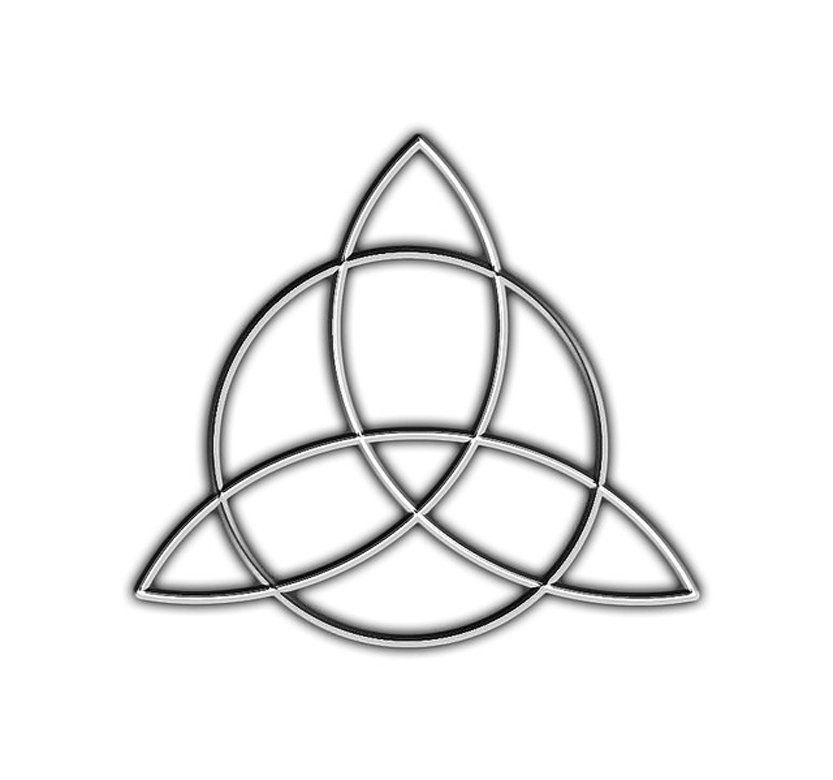
Celtic Trinity Knot Symbol

I encourage you to read as you listen.  There are footnotes along the way defining unfamiliar words and providing some context for those who want to go a little deeper. (just click the footnote number.)

Traces of the Trinity Podcast – Intro

***

Hey there — welcome to the podcast about Traces of the Trinity, a podcast series that explores a question you might not have asked, but once you do, you might not see the world the same way again:

What if the world itself carries hints — echoes — of the Triune God?

A wise man once said that “Godly speculation can have an edifying function.” That’s a line from John Frame,1Ph.D. Yale University and it’s how Peter Leithart2Ph.D., University of Cambridge kicks off his book Traces of the Trinity.

Peter Leithart – Ph.D. University of Cambridge

So today, we’re going to dip our toes into that idea and see where it might take us.

+++

Picture this: you glance around your room. Maybe you’re driving. Maybe you’re washing dishes. There’s the outside world — stuff, things, people. And then there’s you — thinking, feeling, observing.

Modern people — thanks in part to an anxious Frenchman named René Descartes3René Descartes (1596–1650) was a French philosopher, mathematician, and scientist widely regarded as the father of modern philosophy. Seeking certainty in knowledge, he developed the method of systematic doubt, famously concluding “Cogito, ergo sum” (“I think, therefore I am”) as an indubitable foundation for philosophy. Descartes made major contributions to mathematics, including the creation of analytic geometry, which linked algebra and geometry. In metaphysics, he argued formind–body dualism, distinguishing between thinking substance (res cogitans) and extended substance (res extensa). His most influential works include Discourse on the Method, Meditations on First Philosophy, and Principles of Philosophy. Descartes’ thought profoundly shaped modern philosophy, science, and rationalism. — got used to slicing reality into these neat categories: me vs. world, inside vs. outside, mind vs. matter. Descartes wanted to discover the thing that was indubitably certain, and build from there, so he doubted everything he could see, smell, touch (because those could be illusions, right?) — but he couldn’t doubt that he was doing the doubting.

Cogito, ergo sum. I think, therefore I am. (I really exist!)   And so, following Descartes’ lead, modernity learned to trust the “thinking thing” inside — and eye everything else as suspicious, out there.

But here’s where Leithart says — hold on a second. Is that really how we live?

You are not just an observer floating above the world. You have a body. Try ignoring it for a day. Stub your toe. Bite your tongue. Watch how fast your “inner self” realizes it’s not floating anywhere.

Even more, you need the world to get inside you — literally. You’re breathing air from outside. Drinking water. Eating food that was once something else entirely. If you close yourself off from the world, you don’t become more spiritual — you die.

+++

So here’s where this gets interesting. Leithart takes this ordinary truth — that the world gets into us, and we get into it — and invites us to see it through the lens of the Trinity.

He uses an old theological word you may not have heard: perichoresis — a fancy Greek term that means mutual indwelling. In the Christian tradition, it describes how the Father, Son, and Spirit dwell in each other completely, without losing who they are.

The Father is in the Son, the Son in the Father, and both in the Spirit.4Scripture addresses this theme of mutual indwelling most directly in John’s Gospel, where Jesus articulates the reciprocal relationship between himself and the Father.

Jesus explicitly states that he exists within the Father while the Father simultaneously exists within him (John 14:10–11), a declaration he repeats for emphasis. He grounds this claim in the Father’s active presence—the Father dwelling within him performs the works Jesus accomplishes (John 14:10–11). This mutual indwelling serves as evidence of their unity, inviting belief through the works themselves (John 10:38).

The relationship extends beyond the Father and Son to encompass believers and the Spirit. Jesus promises that his followers will come to understand a threefold union: he dwells in the Father, they dwell in him, and he dwells in them (John 14:20). This pattern of mutual presence becomes a model for Christian experience. In his prayer to the Father, Jesus envisions believers united with both the Father and Son, just as the Father and Son are united with each other (John 17:21).

Regarding the Spirit specifically, Jesus promises the Holy Spirit as a Helper who will dwell with believers and ultimately be within them (John 14:16–17). While the scriptures don’t explicitly state all three persons simultaneously indwelling one another in a single passage, the Johannine material establishes the foundational theology: the Father and Son mutually indwell each other, believers indwell both through faith, and the Spirit indwells believers. Together, these passages construct a picture of trinitarian communion that extends from the Godhead into the church.

It’s a swirl, a dance, a mutual embrace.  Not fusion — not confusion — but an eternal giving and receiving.

And here’s the bold move: what if this pattern is not just tucked away in theology textbooks — but stitched into creation itself? What if the world hums with hints of this divine choreography?

+++

Leithart admits up front — this isn’t a new idea. Theologians from Augustine5Saint Augustine of Hippo (354–430) was a Christian theologian, philosopher, and bishop of Hippo in North Africa, and one of the most influential figures in Western Christianity. After a restless youth, he converted to Christianity in 386 under the influence of St. Ambrose. His writings shaped Christian doctrine on grace, sin, free will, and the Trinity. Augustine’s most famous works include Confessions, a spiritual autobiography; The City of God, a vision of history shaped by the love of God; and On the Trinity. Blending classical philosophy with biblical faith, Augustine profoundly influenced medieval theology, the Protestant Reformers, and Western thought as a whole. to the Cappadocians6The Cappadocians, or Cappadocian Fathers, were three influential 4th-century Christian theologians from Cappadocia (in modern Turkey): Basil the Great, Gregory of Nazianzus, and Gregory of Nyssa. They played a crucial role in defending and clarifying Trinitarian doctrine, especially the distinction between one essence (ousia) and three persons (hypostaseis), helping to establish Nicene orthodoxy against Arianism. Their work shaped Christian theology, worship, and monasticism, and remains foundational in both Eastern Orthodox and Western Christian traditions. before him, loved to talk about the vestigia Trinitatis — the “traces” or footprints of the Trinity. Over the centuries, the tradition fell out of fashion. But Leithart wants to revive it — not to rewrite doctrine, but to stretch our imaginations.

He’s not trying to prove the Trinity from nature — he’s starting with the revealed truth that the Triune God made the world — and saying: shouldn’t we expect the fingerprints to be there? Shouldn’t we expect echoes and clues, spirals and coils, hints and whorls?

+++

So that’s where this little podcast adventure begins. It’s not about nailing down every analogy or diagramming the divine. It’s about training ourselves to look closer, to wonder more deeply. To believe that when you walk outside — when you share a meal — when you hug someone you love — the pattern of giving and receiving, the shape of mutual indwelling, might just be whispering the life of the Trinity.

And maybe you’ve wondered about this too — is the world just cold, hard matter? Or is it, as Leithart suggests, alive with traces of the Triune life that made it?

+++

So if you only remember one thing today, let it be this: You are not a ghost trapped in a machine. You are a body and a soul, part of a world that moves in and through you — and through it, you might just catch the faintest echo of Father, Son, and Spirit at play.

Next time, we’ll move from the preface to the world right in front of us — the desk, the coffee mug, the window, and the old recliner waiting for that afternoon nap.

We’ll keep asking: What if nothing is quite as separate as we thought? What if we’re all caught up in a divine dance?

Until then, take a look around. Listen for the whispers. And maybe — just maybe — you’ll start spotting traces of the Trinity, too.

The Trinity leaves fingerprints on every inch of creation.

+++

1: Traces of the Trinity: Outside In, Inside Out.

I welcome any questions or comments. [Don’t worry, your personal info will not be given to anyone.]
Resurrection, Renewal, and Living the Future Now

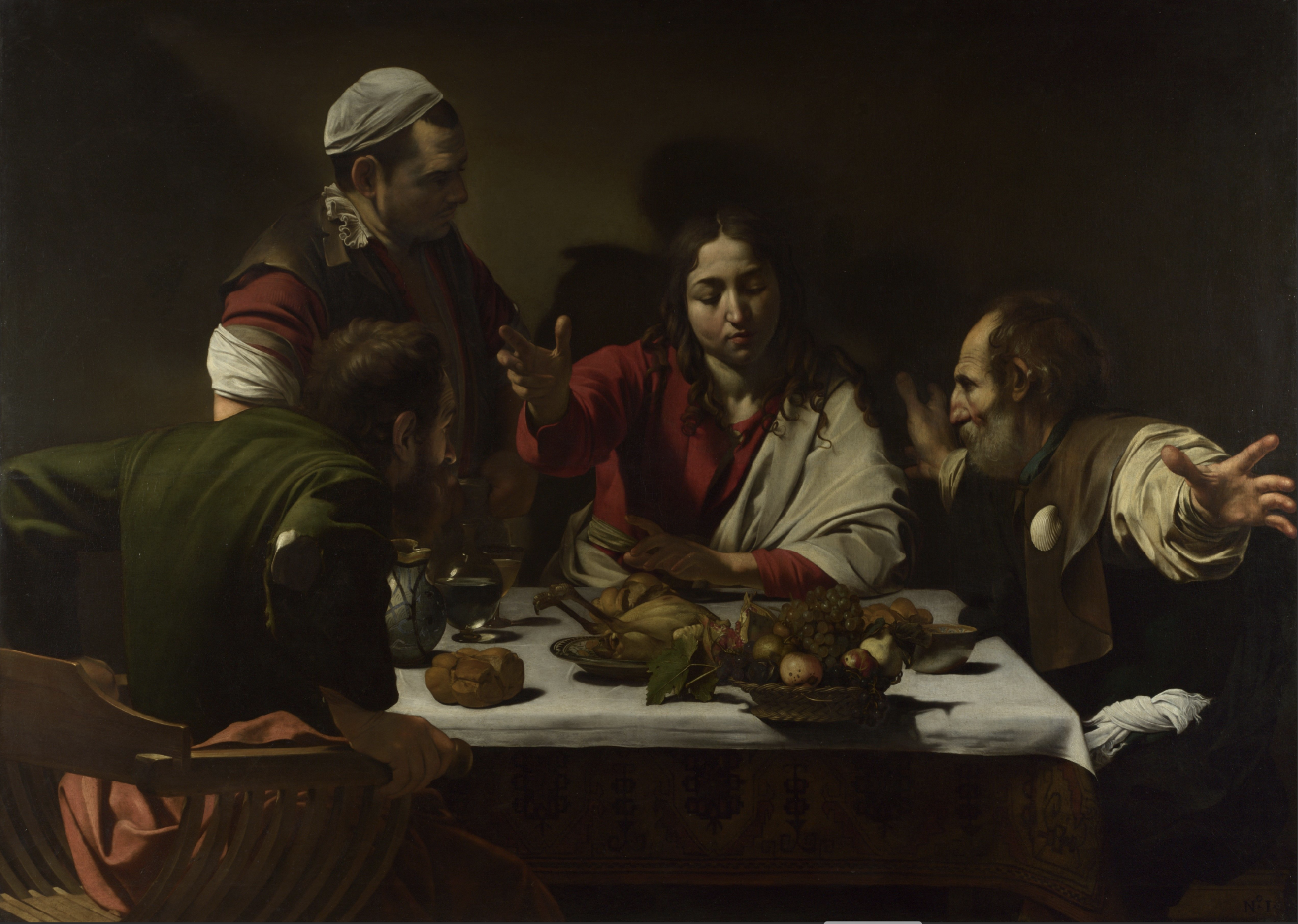
The Supper at Emmaus is a painting by the Italian Baroque master Caravaggio, completed in 1601, and now in London. It depicts the Gospel story of the resurrected Jesus’s appearance in Emmaus.

Audio Podcast

In the first episode, we challenged the idea that the Christian hope is simply about going to heaven.

In the second episode, we traced the biblical story from Eden to New Jerusalem (in other words, from the beginning of the Bible to the end of the Bible, where we noticed the ‘garden’ bookends of Scripture).  And we saw that God’s goal has always been to dwell with his people in a renewed creation.

Now, in this final episode, we turn to the question that inevitably follows:

If resurrection and new creation are our future, what difference does that make right now?

Because Christian hope is not meant to make us passive.

It is meant to make us faithful.

Resurrection Means the Body Matters

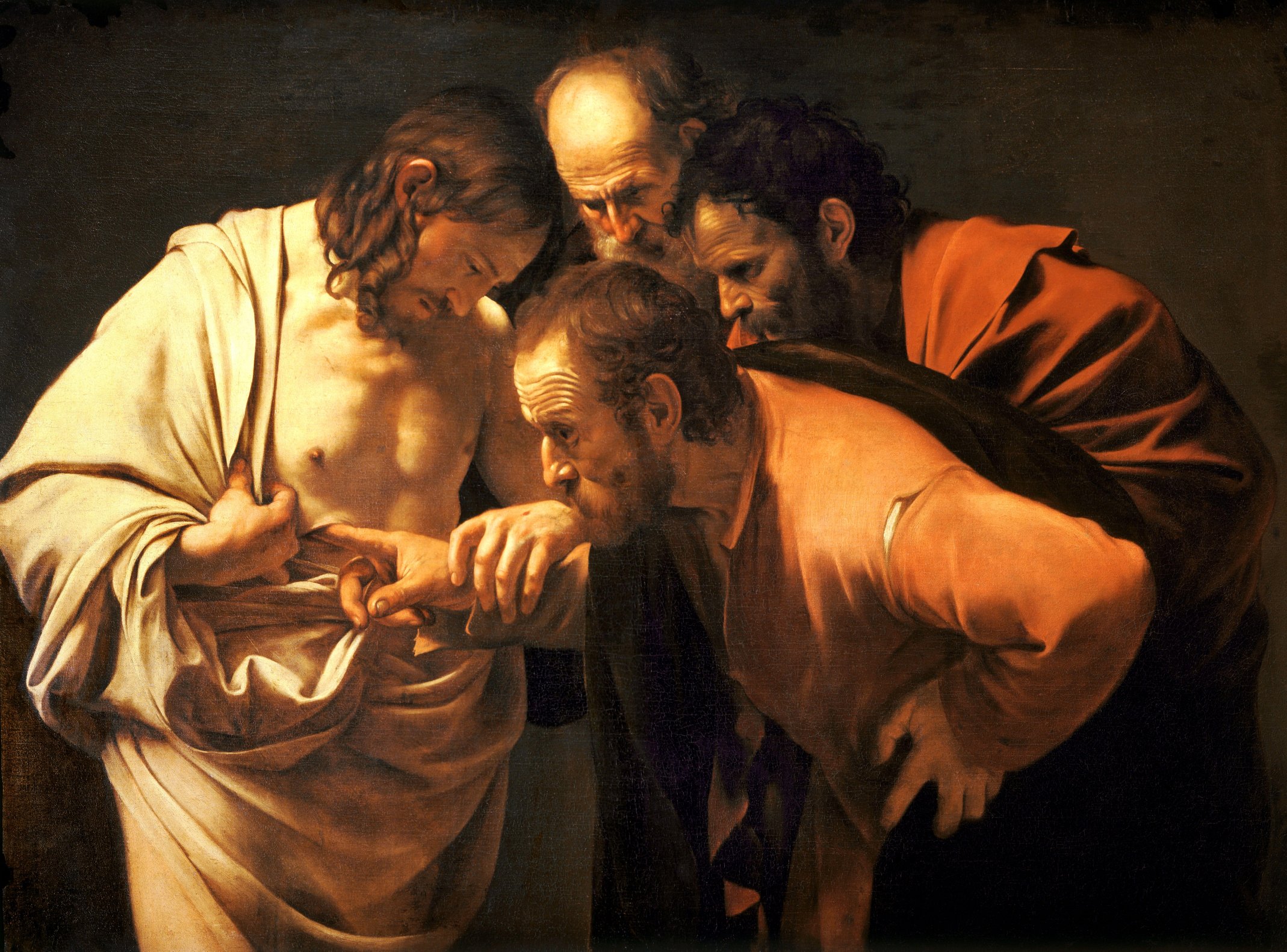
The Incredulity of Saint Thomas – c. 1602 – Caravaggio

Many people—Christians included—have absorbed the idea that the body is something we merely endure until we are finally free from it.

But that’s not Jesus, that’s not Paul, that’s  Plato, the Greek philosopher (400 years before Jesus), that’s Plutarch, a first century historian and young contemporary of Paul.  

But the New Testament never speaks that way.

Paul insists that resurrection is bodily—transformed and glorified, yes, but continuous with the life we live now.

In Philippians 3:21, Paul says that Christ will:

“transform our lowly body to be like his glorious body.”

Not replace it.

Not discard it.

Transform it.

If God intends to raise the body, then what we do in our bodies now matters.

Resurrection declares that the body is not an obstacle to holiness, or to being ‘spiritual’ (as some think), but a gift destined for in-dwelt glory.  In other words, God coming to dwell with us.

Creation Matters Because God Will Renew It

Again, In Romans 8, Paul tells us that all creation itself is groaning, and that its eagerly longing,—to be taken up to heaven with ‘saved souls’?  NO!  Creation is longing for release from the bondage of death, its enemy.  Our enemy.  

All creation waits, Paul says, for the revealing of the children of God.  For God’s children to fulfill the mandate given to them in the Garden.

That means Christian hope is not world-denying, and, to be more personal, it’s not body-denying.  Sadly today, there are a lot of people who deny the importance of the gift of our bodies, some, unfortunately, within the Church—whether its denying bodies in the womb or later the bodies we were given.  

We’ve even arrived at the point where some in our society, and sadly some in the Church, support the use of sex rejection therapy, medicine and surgeries.  That’s a very dark development. God help us as the Church to speak the Truth about who we were created to be.  

For our hope is not body denying.  It’s body-healing.  It is world-healing.  

What Christians do now—by the in-dwelt power of the Spirit—is not wasted. It is, in some mysterious way, taken up into God’s future ‘in Christ’ ‘in the Lord’.

Resurrection turns everyday faithfulness into embodied, eternal, significance.

Christian Work Is Not Meaningless

Paul concludes his great resurrection chapter with these words:

“Therefore, my beloved brothers and sisters,
be steadfast, immovable,
always abounding in the work of the Lord,
knowing that in the Lord your labor is not in vain.”

1 Corinthian 15:58

Notice the logic.

Because resurrection is true, work is not wasted.  

That’s the context of this passage found here in THE RESURRECTION chapter of Scripture.  Our labor is not in vain.  

Faithful parenting, honest labor, quiet obedience, unseen service—none of it is lost.

The Christian life is not a temporary sketch to be thrown away.

It is a draft God intends to finish.

Suffering Is Real, but Not Final

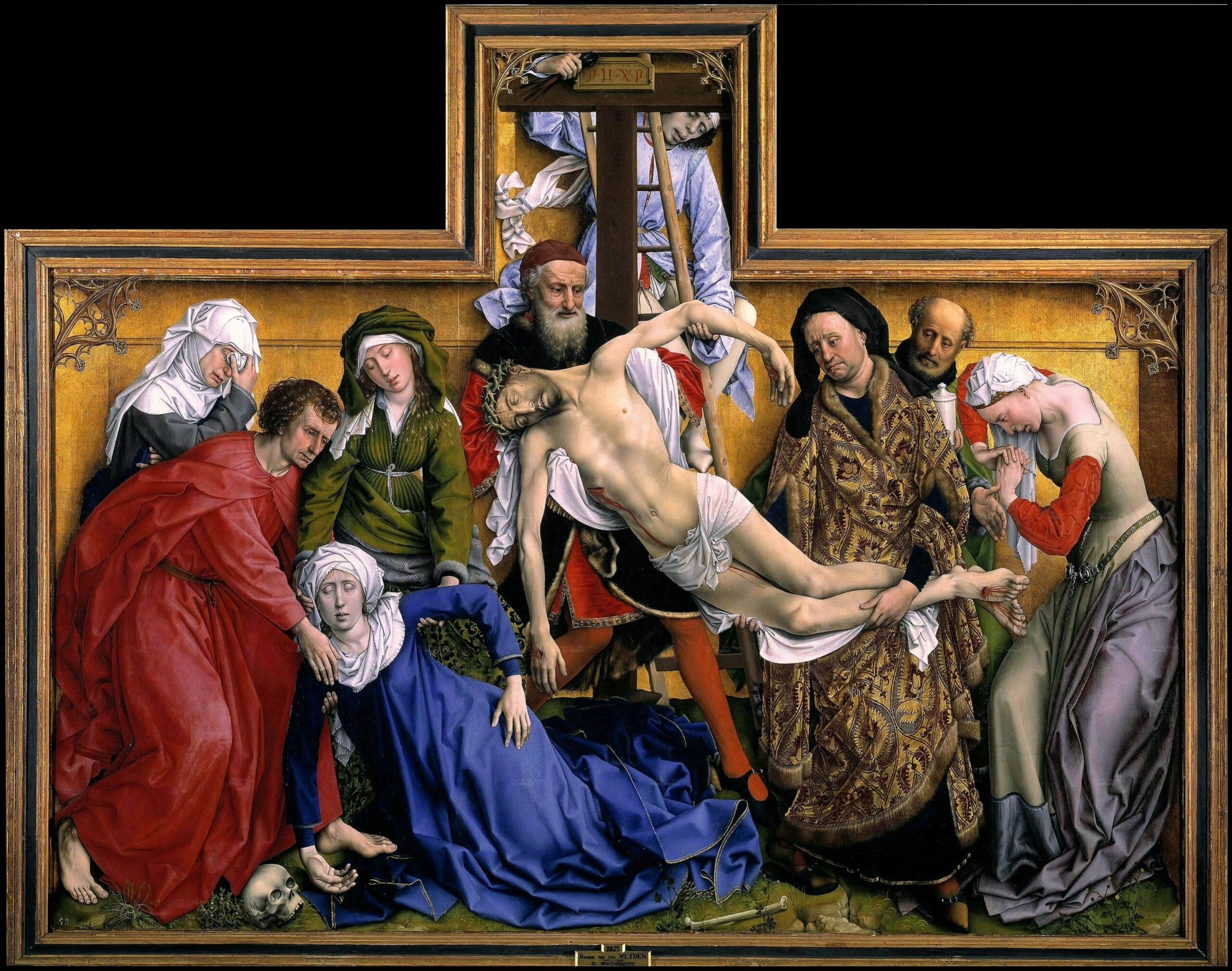
The Descent from the Cross – c 1435 – Van Der Weyden

And now we need to talk about something difficult and sometimes hard to understand.  Christian hope does not minimize suffering.

Paul never tells believers to pretend pain is unreal.

But he does insist that suffering is not the last word.

In Romans 8:18, Paul says:

“The sufferings of this present time are not worth comparing
with the glory that is to be revealed.”

Romans 8:18

This is not denial.  (You don’t know the Apostle Paul if you think he is in a state of denial here.)

It is defiance.

Resurrection hope allows Christians to grieve honestly without despairing finally.  We don’t grieve as other do, who have no hope.1“But we do not want you to be uninformed, brothers, about those who are asleep, that you may not grieve as others do who have no hope.” 1 Thess 4:13

Mission Is Participation in God’s Future

Jesus announces the kingdom of God not as a distant dream, but as a present reality breaking into the world.

When the church bears witness—through proclamation, mercy, justice, hospitality, and self-giving acts of love—it is participating ahead of time in the world God has promised.

So our Mission is not about evacuating souls.

It is about anticipating New Creation.

The church is called to be a sign, an instrument, a foretaste, and a tabernacling presence, of God’s future.

Living Between the Times

Of course, we Christians live between resurrection begun and resurrection completed.

We live in the overlap of the ages. (those ages are ‘the present evil age’2Gal 1:4—as many of us know all too well—and ‘the age to come.’3Eph 1:21; Heb 6:5)

That’s a primary dichotomy in scripture – not between spirit and matter – but between the present evil age and the age to come.

And that tension explains why:

  • death still hurts
  • creation still groans
  • faith still requires endurance

But it also explains why hope is possible.

Because the future has already begun in Christ.

A Different Way to Face Death

Christian hope does not treat death as a friend.

Death is an enemy—but a defeated one.

Christians grieve, of course, but not as those without hope.

Because death is not a destination.

It is a temporary interruption on the way to resurrection.

Living the Story

The Christian story does not end with souls escaping earth.

It ends with:

  • God coming down to dwell with humanity at the center of God’s bi-natured creation when heaven and earth are joined in holy matrimony.
  • The story ends with Creation renewed
  • And Resurrection completed

And that future reshapes the present.

Every act of faithfulness, every act of love, every act of obedience—done in Christ—participates in the world God is bringing.

Because the crucial move in Scripture [again] is God coming down to us, NOT us going up to God.  So by God’s grace, let us prepare a place for God to dwell.

And live not as someone waiting to leave the world behind, but as someone learning to live in the light of the world to come.

Closing Benediction

May the God who raised Jesus from the dead fill you with hope through the power of the Holy Spirit.

May you live not as one waiting to escape the world, but as one shaped by the promise of resurrection.

And may the hope of new creation strengthen your faithfulness, deepen your love, and steady you until the day God makes all things new.

Amen.

Quotables

Resurrection Defines Christian Hope — N. T. Wright

“The early Christians did not believe in a future disembodied existence. They believed in resurrection — a new kind of bodily life after whatever interval there might be between death and that resurrection.”

— Surprised by Hope


The Body Matters — Wright

“What you do with your body in the present matters because God intends to raise that body in the future.”

— Surprised by Hope


Creation Renewed, Not Destroyed — Wright

“God’s plan is not to abandon this world, the world he said was ‘very good.’ God intends to remake it.”

— Surprised by Hope


Present Faithfulness Has Future Value — Wright

“What you do in the present — by painting, preaching, singing, sewing, praying, teaching, building hospitals, digging wells, campaigning for justice — will last into God’s future.”

— Surprised by Hope


Suffering and Hope — Wright

“Christian hope does not deny the darkness; it shines light precisely into it.”

— Surprised by Hope


Resurrection and God’s Dwelling Presence — G. K. Beale

“The resurrection of God’s people is the final stage in God’s plan to fill the entire creation with his dwelling presence.”

— A New Testament Biblical Theology


Death Defeated — Wright

“Death is the enemy. It is not part of God’s good creation, and it will be destroyed.”

— Surprised by Hope


“Therefore, my beloved brothers and sisters,
be steadfast, immovable, always abounding in the work of the Lord,
knowing that in the Lord your labor is not in vain.”

1 Corinthians 15:58

REDISCOVERING THE CHRISTIAN HOPE – SERIES

Podcast Resources

  • N. T. Wright, Surprised by Hope
  • N. T. Wright, The Resurrection of the Son of God
  • G. K. Beale, The Temple and the Church’s Mission
  • G. K. Beale & Mitchell Kim, God Dwells Among Us

+++

I welcome any questions or comments. [Don’t worry, your personal info will not be given to anyone.] Thanks!