

Before We Talk About Gaza, Remember October 7
Before we talk about Gaza, we need to begin with something that should not be difficult for Christians to say plainly: the suffering of Palestinian civilians has been horrific. Thousands upon thousands of men, women, and children have been killed. Families have been shattered. Homes and entire neighborhoods have been destroyed. Whatever conclusions we eventually reach about Israel’s conduct of the war, none of that suffering should be minimized, explained away, or treated as morally insignificant. Every Palestinian life bears the image of God.
But moral seriousness also requires moral chronology.
This war did not begin with Israeli bombs falling on Gaza. It began on October 7, 2023, when Hamas-led attackers crossed into Israel and carried out a deliberately planned assault in which civilians were murdered, hostages were seized, and sexual violence was committed. The killing of civilians was not merely an accidental byproduct of an attack on military targets. It was a central feature of the attack itself.
That matters.
One of my concerns in the public discussion since then—especially in some Christian commentary—is that October 7 has gradually become little more than the subordinate clause that comes before everything Israel subsequently did: Yes, October 7 was terrible, but… And then the moral attention moves almost entirely to Israel.
I don’t think Christians can reason that way. Hamas cannot simply disappear from the moral accounting once Israel begins to respond. Nor can the nature of the attack be detached from the question of whether Israel had a right to respond at all. A government confronted with the mass murder and kidnapping of its citizens has not merely a right to protect them; it has a responsibility to do so. Civil authority exists, in part, to restrain those who would prey upon the innocent.
Yet that is not the end of the moral argument. The fact that Israel had a just cause for responding does not mean that every Israeli action taken in response was therefore just. The right of self-defense is not permission to do anything. The laws of war—and the older Christian moral tradition from which much of their logic developed—still require distinction between combatants and civilians, proportionality in the use of force, and serious efforts to protect innocent life.
So I want to hold two truths together from the outset.
Israel had both a right and a duty to respond to October 7.
And Israel remains morally accountable for how it responded.
If we begin anywhere else, I think we distort the moral landscape before the discussion has even begun.
I’ve compiled a collection of videos about October 7, 2023, for those who may have forgotten—or perhaps never fully understood—the horror of that day. You’ll also find videos documenting the denials, rationalizations, and excuses that followed from many quarters.
Please spend some time watching them.
I. Genocide Is a Word With a Meaning
This brings us to the most serious accusation being made against Israel: genocide.
Words matter here, especially words of this magnitude. “Genocide” cannot simply mean a war in which enormous numbers of civilians have died, neighborhoods have been destroyed, and human suffering has reached appalling proportions. If that were the definition, many of the bloodiest wars of the last century would automatically qualify. Think Dresden, Berlin, Hiroshima.
The legal definition is considerably more specific.
The 1948 Genocide Convention defines genocide around certain prohibited acts committed with the “intent to destroy, in whole or in part, a national, ethnical, racial or religious group.” Killing members of such a group is one of those acts. So is deliberately inflicting conditions of life calculated to bring about the group’s physical destruction. But the crucial element is intent. Not simply an intention to defeat an enemy. Not even an intention to wage a devastating war. The crime requires the specific intention to destroy the protected group as a group.
That distinction matters enormously.
And this is where I think some Christian commentary about Gaza has moved far too quickly. The images are unbearable. Dead children are unbearable. A grieving Palestinian mother holding the body of her child ought to move us just as surely as an Israeli mother grieving a murdered son or daughter. Christian compassion does not ask for a passport before mourning the dead.
But compassion cannot relieve us of the responsibility to make moral distinctions.
A horrifying civilian death toll may be evidence relevant to a genocide allegation. It is not, by itself, proof of genocide.
That was one of the points I made in Part 1, and I think it bears repeating because so much of the argument seems to proceed in the opposite direction: Look at the destruction. Look at the number of dead. What else could this possibly be?
But that is precisely the question that must be answered rather than assumed.
It is important to describe the legal situation accurately.
And after looking at the arguments, the case for genocidal intent has not been established.
Why?
Because there is another explanation for the terrible destruction in Gaza—one that does not make the suffering less real, but does make a moral and legal difference. Israel has been fighting an entrenched armed organization after the worst massacre of Jews since the Holocaust, in an extraordinarily dense urban environment, against an enemy whose fighters and military infrastructure have operated within civilian areas. Israel’s stated war aims have been the destruction of Hamas’s military capacity and the recovery of hostages, not the destruction of Palestinians as a people.
That claim, of course, cannot simply be accepted because Israel says it. Governments at war must be judged by what they actually do.
But what Israel has actually done does not point in only one direction. Israeli forces have used civilian-warning procedures, evacuation orders, humanitarian corridors, and systems of military legal review. None of those practices proves that every Israeli strike was lawful. They do, however, matter when the accusation is not merely that Israel has used excessive force, but that Israel’s underlying purpose is the physical destruction of the Palestinian people.
Here we need to keep several categories separate.
Israel may have conducted particular attacks that were disproportionate.
Israeli soldiers may have committed war crimes.
Israeli officials may have made statements that were reckless, ugly, or morally indefensible.
Policies restricting humanitarian assistance may deserve severe criticism.
None of those possibilities should be excluded merely because Israel entered the war with a just cause.
But neither do any of them, individually or automatically, establish genocide.
That distinction is not semantic hair-splitting. It is the difference between accusing a government of fighting a war unlawfully in particular respects and accusing it of attempting to destroy a people.
Christians, of all people, should resist the temptation to inflate language simply because the stronger word carries greater moral force. Bearing false witness does not become righteous because it is done on behalf of people who are genuinely suffering.
And we should be equally careful in the other direction. Rejecting the genocide charge does not require pretending that everything Israel has done in Gaza has therefore been wise, proportionate, or just. I am not making that argument.
My claim is narrower.
The suffering in Gaza is real. The moral questions surrounding Israel’s prosecution of the war are real. Possible violations of the laws of war must be judged on their evidence. But “genocide” is a specific accusation requiring evidence of a specific intention—and that intention has not been established, by a longshot.
The distinction matters because justice requires us to name wrongdoing accurately.
And before we can judge Israel’s conduct fairly, we also have to understand something about the enemy it was fighting—and the kind of war that enemy deliberately chose.
II. Hamas and the Kind of War It Chose
If we are going to judge Israel’s conduct in Gaza morally, then Hamas has to remain in the picture—not as a rhetorical device for excusing everything Israel does, but as an actual moral agent whose ideology, strategy, and choices have helped shape the war.
That begins with Hamas itself.
Its original 1988 charter was not merely a document of Palestinian nationalism. It was explicitly Islamist and contained unmistakably antisemitic material. Article 7 approvingly cited a hadith1A hadith is a reported saying, action, or approval of the Prophet Muhammad, preserved through chains of transmitters and later collected in written compilations.
The Qur’an is considered by Muslims to be revelation from God. Hadith are different: they are reports about Muhammad—what he said, did, permitted, or disapproved of. Together, hadith literature and the Qur’an became major sources for Islamic theology, ethics, and law. envisioning a future in which Muslims would “fight the Jews.” The document also trafficked in conspiratorial claims about Jewish power and presented the conflict in religious and civilizational terms, not simply as a territorial disagreement between two national movements.
Now, Hamas did issue a new political document in 2017 that softened some of this language. It explicitly distinguished Jews as a religious people from Zionism, dropped much of the earlier charter’s overt antisemitic rhetoric, and accepted the creation of a Palestinian state within the 1967 lines as a possible “formula of national consensus.”
However, the 2017 document did not recognize Israel’s permanent legitimacy. It continued to affirm armed resistance and retained the aspiration to the “complete liberation of Palestine.” In other words, Hamas moderated some of its language without clearly accepting a permanent Jewish state alongside a Palestinian one.
And then came October 7.
As I noted earlier, (and documented here) this was not simply a military raid that tragically spilled over into civilian areas. Human Rights Watch, after interviewing survivors and reviewing extensive photographic and video evidence, concluded that killing civilians and taking hostages were central aims of the planned assault. Palestinian armed groups deliberately attacked homes and civilian communities, murdered people attempting to flee, and abducted civilians into Gaza. HRW classified murder and hostage-taking as crimes against humanity as well as war crimes.
Amnesty International’s subsequent investigation likewise documented murder, torture, hostage-taking and sexual violence by Hamas and other Palestinian armed groups.
That history matters because Hamas’s responsibility did not end when its fighters crossed back into Gaza.
It also chose how this war would be fought.
Gaza is one of the most densely populated environments in the world, and Hamas has operated militarily from within that civilian environment. There is documented evidence of Palestinian armed groups using civilian structures for military purposes and operating from densely populated areas. A United Nations commission, while appropriately cautioning that not every Israeli allegation could be independently verified, acknowledged reports and evidence of tunnels beneath civilian structures, military use of some hospitals, schools and mosques, and rocket fire from locations near civilian residential areas. The same commission later verified a specific instance of Hamas militants preparing an ambush from inside a school.
We do not need to prove every allegation of deliberate human shielding to recognize the larger moral problem. When an armed organization places fighters, weapons, tunnels, command functions, or firing positions within or alongside civilian infrastructure, it knowingly creates conditions in which distinguishing the battlefield from civilian life becomes extraordinarily difficult.
That does not remove Israel’s obligations.
A hospital does not become a free-fire zone because a Hamas operative enters it. The presence of fighters among civilians does not permit indiscriminate attack. Israel must still distinguish military objectives from civilians, take feasible precautions, and judge proportionality before striking. The laws of war were written precisely because combatants do not get to abandon their obligations when the enemy violates his.
But the reverse is also true.
Hamas cannot expose civilians to the dangers created by its own method of warfare and then disappear morally from the resulting tragedy.
This is one place where I think much Western commentary (and some Christian commentary) becomes strangely one-dimensional. A photograph shows the aftermath of an Israeli strike. We see the destroyed building, the wounded child, the grieving family—and naturally our moral attention fixes upon the weapon that caused the immediate destruction.
That reaction is human.
But moral analysis has to ask more questions. What was being targeted? Was there a legitimate military objective? Were fighters operating nearby? What precautions were taken? Was the anticipated civilian harm excessive in relation to the expected military advantage? Could another method have been used? And what responsibility belongs to an armed organization that deliberately conducts military operations from within a civilian population?
Those questions do not make the dead child less dead.
They make our judgment more complete.
And one distinction is essential here: Hamas is not the Palestinian people.
Two million Gazans cannot simply be morally conscripted into Hamas because Hamas governed the territory. Palestinian civilians remain civilians. Their political views vary. Their responsibility varies. Children bear no responsibility whatever for the circumstances into which they were born. Collective guilt is no more Christian when applied to Palestinians than when applied to Jews.
But refusing to equate Hamas with all Palestinians cannot mean pretending Hamas is incidental to Palestinian suffering.
Its ideology matters. October 7 matters. Hostage-taking matters. Its continued military operations within civilian areas matter. The kind of war Hamas chose to fight matters.
Equal human dignity does not mean equal moral responsibility.
That distinction will become even more important when we turn to another feature of this conflict that is often described as though it appeared out of nowhere: Gaza’s blockade, Israel’s security barrier, checkpoints, territorial control, and the seemingly endless failure of proposed peace settlements.
Those things have imposed real burdens on Palestinians.
They also have a history.
III. The History Behind the Wall: Gaza, Borders, and Failed Peace
One of the easiest ways to tell the Israeli-Palestinian story is to begin with what can be seen today: the wall, the checkpoints, the blockade, the permits, the settlements, the restrictions on movement.
For Palestinians, these are not abstractions. They shape ordinary life. A checkpoint can mean a longer trip to work, difficulty reaching family, or uncertainty about whether one can get from one town to another. The security barrier cuts through portions of the West Bank, separating some Palestinians from farmland, employment, schools, and neighboring communities. Those burdens are real, and Christians should not pretend otherwise.
But the wall has a history.
During the Second Intifada 2 Intifada is an Arabic word meaning roughly “uprising,” “rebellion,” or “shaking off.”
Literally, it carries the sense of shaking something off oneself
In the Israeli-Palestinian context, it usually refers to major Palestinian uprisings against Israeli rule or control: First Intifada (1987–1993): involved protests, strikes, civil disobedience, stone-throwing, and also violence. So when protesters say, “Globalize the Intifada, they mean ‘throw off’ Jewish rule. A clearly anti-Semitic characterization, harkening back to the Jews ‘rule’.
Second Intifada (2000–2005): was substantially more violent and included shootings and suicide bombings targeting Israeli civilians, along with major Israeli military operations.
“Globalize the Intifada” (a common term among protest groups today) is especially disturbing because it takes a term historically associated with Palestinian uprising—including terrorism against Israeli civilians—and explicitly calls for its globalization. Even if some protesters intend only worldwide political solidarity, Jews can reasonably hear the slogan as a call to carry the struggle against Israel—and potentially against Jews identified with Israel—into societies far removed from the conflict itself. , beginning in 2000, Israelis experienced a sustained campaign of shootings and suicide bombings in buses, restaurants, hotels, markets, and other civilian spaces. Hamas and other Palestinian armed groups participated extensively in those attacks. In 2002, amid that violence, Israel began constructing the West Bank security barrier. Suicide attacks subsequently declined sharply, although the barrier was only one factor; Israeli military and intelligence operations also played major roles.
That history does not settle every moral question about the barrier. In 2004, the International Court of Justice concluded in an advisory opinion that the route Israel had chosen through occupied Palestinian territory, and the regime associated with it, violated international law and imposed serious burdens on Palestinian rights. Israel maintained that the barrier was necessary for security. Both facts belong in an honest account: the security threat was real (what else would you have them do?), and, yet, understandably, the particular response to that threat created genuine Palestinian grievances.
This is precisely the kind of distinction I want Christians to learn to make. Explaining why a security measure exists is not the same thing as declaring every feature of it just. But criticizing the measure as though it arose from gratuitous Israeli cruelty, with no reference to the bombings that preceded it, distorts the history in the opposite direction.
Gaza tells a similar story.
In 2005, Israel removed its settlements from Gaza and withdrew its permanent military presence from inside the territory. Roughly 7,500 Israeli settlers were evacuated. Understandably, Israel continued to exercise substantial control over Gaza’s airspace, coastline, and most access points, so Palestinians object to describing what followed as complete independence. Still, something politically significant had happened: Israeli soldiers and settlements were no longer permanently located inside Gaza.
What followed profoundly shaped Israeli attitudes toward future territorial withdrawals.
Hamas won the Palestinian legislative elections in 2006. After increasingly violent conflict with Fatah, it forcibly took control of Gaza in 2007. Israel, given Hamas’ stated goals, then tightened restrictions on Gaza, and Egypt also restricted its border with the territory—a fact that sometimes disappears from descriptions of Gaza as though Israel alone controlled every avenue of access.
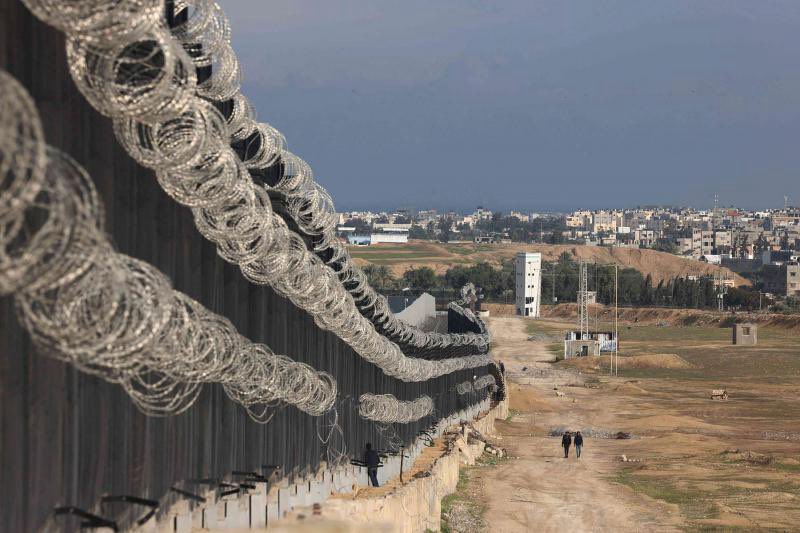
Rocket attacks from Gaza into southern Israel continued through the years that followed.
Again, two things can be true.
For Gazans, the blockade became an extraordinarily burdensome reality that restricted commerce, movement, economic opportunity, and ordinary life. Whatever its security rationale, its human consequences cannot simply be brushed aside.
For Israelis, however, the sequence looked very different: Israel removed settlements and troops from Gaza; Hamas came to power; Hamas then seized exclusive control of the territory; and rockets continued to come across the border.
That experience matters when Israelis are subsequently told, Just withdraw from more territory and peace will follow.
But Israel has reasons, grounded in experience rather than mere paranoia, to ask: What happens the day after withdrawal? Who governs the territory? Who controls the weapons? What prevents another Gaza? What does our experience tell us?
Geography makes those questions especially acute.
Israel is an extraordinarily small country. Between the Mediterranean Sea and the pre-1967 armistice line, it is less than ten miles wide at its narrowest point. The highlands of the West Bank overlook much of Israel’s densely populated coastal plain. That does not give Israel an unlimited claim to Palestinian territory. But it does mean that maps which look tidy from Washington, Brussels, or New York can look considerably less tidy from Jerusalem.
This is also why I think Christians should be cautious when speaking as though the phrase “two-state solution” itself solves the problem.
I support the aspiration behind it: two peoples living with dignity, political security, and the ability to govern their own affairs. But saying two states is much easier than answering the questions required to create them.
Where exactly is the border? What happens to Israeli settlements? Which parts remain with Israel and which are evacuated? How are land swaps arranged? What happens in Jerusalem? What security presence, if any, remains in the Jordan Valley? How is a Palestinian state prevented from becoming a platform for attacks on Israel? And who can credibly guarantee the agreement if Palestinian political authority remains divided?
These are not invented obstacles designed to prevent peace. They are the issues that have repeatedly appeared in actual negotiations.
The Camp David talks in 2000 did not produce an agreement, but they involved unprecedented negotiations over precisely these permanent-status questions. The Clinton Parameters later that year envisioned a Palestinian state comprising roughly 94–96 percent of the West Bank, supplemented by land swaps. Negotiations continued at Taba in early 2001. Under the Annapolis process later in the decade, Prime Minister Ehud Olmert and Palestinian Authority President Mahmoud Abbas again conducted serious discussions over borders, Jerusalem, security, refugees, and land exchanges.
None produced a final agreement.
The tragedy is that negotiations have repeatedly run into the same hard reality: each side fears that what the other calls peace may leave it less secure than before.
Palestinians fear that a supposedly temporary system of Israeli control will simply become permanent.
Israelis fear that territory relinquished for peace may instead become territory from which they are attacked.
Neither fear is imaginary.
Consider the following quote by David Goldman made during the Obama Administration:
Obama’s putative deal would divide Jerusalem, which Israel claims as its capital; displace perhaps 140,000 Israelis living on the West Bank (including Foreign Minister Avigdor Lieberman); and leave Israel with what the Israelis call “Auschwitz borders”: a bulge of territory pointing into central Israel fourteen miles from the Mediterranean. The deal would give Palestinian rocketeers on West Bank hilltops a clear shot at Israel’s largest cities and major airports. And it would do this in the context of an entirely feckless American effort to prevent Iran from acquiring nuclear weapons.
Israeli Prime Minister Benyamin Netanyahu will say No with overwhelming support from the Israeli public. The crisis in American-Israeli relations will dwarf any past disagreements, including Eisenhower’s 1956 order to Israel, France, and Britain to give up the Suez Canal, and Kissinger’s wrangle, during the 1970s, over the Israeli occupation of the Sinai. These differences involved security matters at Israel’s periphery; the present issue goes to the heart of the Jewish state, the integrity of its capital, and the defensibility of its borders.
And that leaves us with a problem far more difficult than the morality play of oppressor and oppressed. Palestinians really do experience humiliations, restrictions, dispossession, and sometimes injustice. Israelis really have endured suicide bombings, rocket attacks, kidnappings, and massacres. Security measures can protect innocent people while also placing serious burdens upon other innocent people.
Christian moral reasoning has to be spacious enough to see both.
Which brings me to one Palestinian Christian who, I think, helps us see the conflict more clearly than any slogan does.
His name is Daoud Nassar.
He knows checkpoints, disputed land, blocked roads, and the frustrations of Israeli bureaucracy firsthand.
And yet the motto of his family farm is remarkably simple:
“We Refuse to Be Enemies.”
IV. “We Refuse to Be Enemies”
Daoud Nassar’s family owns a farm outside Bethlehem known as the Tent of Nations. Their difficulties with Israeli authorities have been real and long-running. The family has spent decades defending its claim to the land in court. They have faced restrictions on access, difficulty obtaining building permits, destruction of fruit trees, and a blocked road leading to the property. Visitors sometimes have to walk the final stretch to reach the farm.
In other words, Nassar is not speaking about Palestinian grievances from the comfort of an American university auditorium.
He has lived them.
And yet the motto of his family farm is:
“We Refuse to Be Enemies.”
That sentence deserves to linger for a moment.
It does not mean, We refuse to acknowledge injustice.
It does not mean, We pretend there are no conflicts over land, security, law, or political power.
And it certainly does not mean that Nassar simply accepts everything the Israeli government or nearby settlers have done.
It means something much more demanding.
Nassar refuses to let grievance become hatred.
The account of his family is striking precisely because their response rejects both violence and a “victimhood mindset.” Nassar teaches his children to recognize the humanity of Israeli soldiers even when the family is detained on the way to church. He has welcomed Jewish settlers onto the property. Encounters that could easily have hardened into mutual contempt have sometimes instead produced apology, cooperation, and unexpected acts of friendship.
That strikes me as deeply Christian.
There is a difference between demanding justice and allowing injustice to define you.
There is a difference between resisting what is wrong and cultivating hatred toward the people you believe have wronged you.
And there is a difference between saying, My neighbor has treated me unjustly, and saying, My neighbor therefore has no rightful place in the world.
Much of this conflict has been sustained by precisely that latter logic.
Nassar offers another way.
His approach does not solve the Israeli-Palestinian conflict. It does not answer every question about borders, settlements, military occupation, or national sovereignty. It is not a foreign-policy program.
It is something more basic.
It is Christian moral formation.
Nassar describes himself as one of the “people of the resurrection,” people of hope and light. That is a radically different imagination from one formed by vengeance, ethnic hatred, or the conviction that justice requires the disappearance of one’s enemy.
And Christians should notice the distinction.
The New Testament does not command us to pretend enemies do not exist.
It commands us to refuse to become like them.
That principle will matter as we turn to another question that has divided Christians for generations: what, if anything, does the continued existence of the Jewish people—and the modern State of Israel—mean within the Christian story?
Because here too, I think Christians often reach for explanations that are far too simple.
[continue reading on next page]