
Response to a Christian friend. (Footnotes provided for key terms.)
I’ve been thinking more about our exchange concerning Gaza, and I want to give you a more substantial response. But I don’t want to fire something off quickly, because the questions you’re raising—civilian casualties, proportionality, genocide, Hamas’s responsibility, humanitarian aid, and Israel’s conduct of the war—deserve something more careful than a few paragraphs.
So I’m working on a longer response that will become an extended blog post with links to supporting data. For now, here’s the short version.
The Civilian Death Toll—and What It Does Not Prove
First, I never said the Palestinian death toll isn’t extraordinary or horrifying. It is. Where I disagree with you is about what follows from that fact. The aggregate Gaza Health Ministry number, for example, is not simply a count of “Palestinian civilians killed by Israel.” It does not distinguish civilians from Hamas and other combatants in its headline total, nor, even if we accept the aggregate figure, does the raw number establish responsibility for every death.
More importantly, a horrific civilian death toll does not by itself establish genocide. Genocide is a much more specific charge involving an intention to destroy a people as such. That is why I think Connelly1’Progressive’ Christian writer Shawn Patrick Connelly is much too confident simply calling Gaza a genocide. One can believe that particular Israeli strikes were excessive, disproportionate, and misguided, without concluding that Israel’s purpose was to destroy the Palestinian people.
Hamas Cannot Disappear from the Moral Accounting
Second, I think Hamas too often gradually disappears from the moral accounting.
October 7 wasn’t merely an attack in which 1,200 civilians unfortunately died. Human Rights Watch concluded after interviewing scores of witnesses and examining hundreds of photographs and videos that the Hamas-led assault was designed to kill civilians and take hostages. The deliberate killing and hostage-taking were central features of the planned attack. [Source: Human Rights Watch]
Amnesty’s later investigation likewise concluded that Palestinian armed groups committed war crimes and crimes against humanity, including murder, torture, hostage-taking, and sexual violence. [Source: Amnesty International]
And much of October 7 was documented on video—including material recorded by the attackers themselves. [Video documentation in my next post.] I don’t think we should sanitize that reality or allow October 7 to become merely the subordinate clause preceding everything Israel subsequently did.
The Kind of War Hamas Chose to Fight
Nor does Hamas’s responsibility end on October 7. The kind of war it chose to fight matters: an entrenched armed organization operating from within an extraordinarily dense civilian environment, with documented military use of civilian areas and facilities—like hospitals & schools. That doesn’t give Israel permission to ignore proportionality or civilian protection. But neither can Hamas’s method of warfare be erased when assigning moral responsibility for the terrible civilian consequences.
The Oppressor/Oppressed Lens
There is another, broader question I want to explore: the interpretive framework through which much of the contemporary political Left—including portions of the ‘Progressive’ Christian Left—approaches conflicts like this one.
I think much of the contemporary political Left has absorbed an oppressor/oppressed framework from contemporary critical theories2Critical theory emerged from twentieth-century epistemological shifts, rooted in Marxist philosophy and associated with the Frankfurt School thinkers Max Horkheimer, Theodor Adorno, and Jürgen Habermas. The approach rests on the conviction that all theories are human constructions shaped by specific contexts and interests, and critical theory’s task is to expose theories that justify oppressive practices and demand their reconsideration. It functions as an intellectual instrument of liberation. and then sometimes uses that framework as the first interpretive lens through which complicated political, cultural and moral questions are viewed.
Once the categories are assigned—colonizer/colonized, powerful/powerless, privileged/marginalized—the moral conclusions can begin to seem almost predetermined.
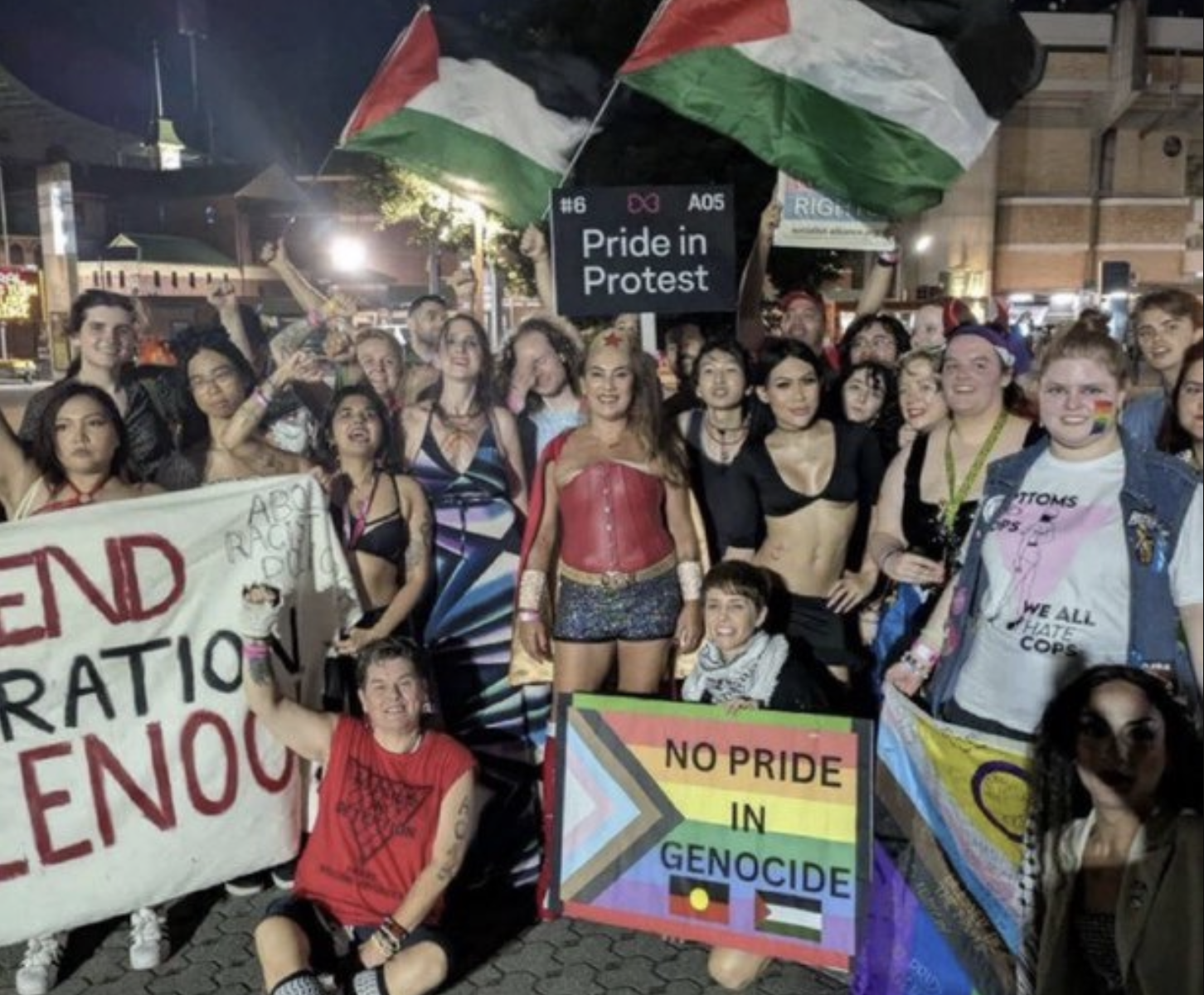
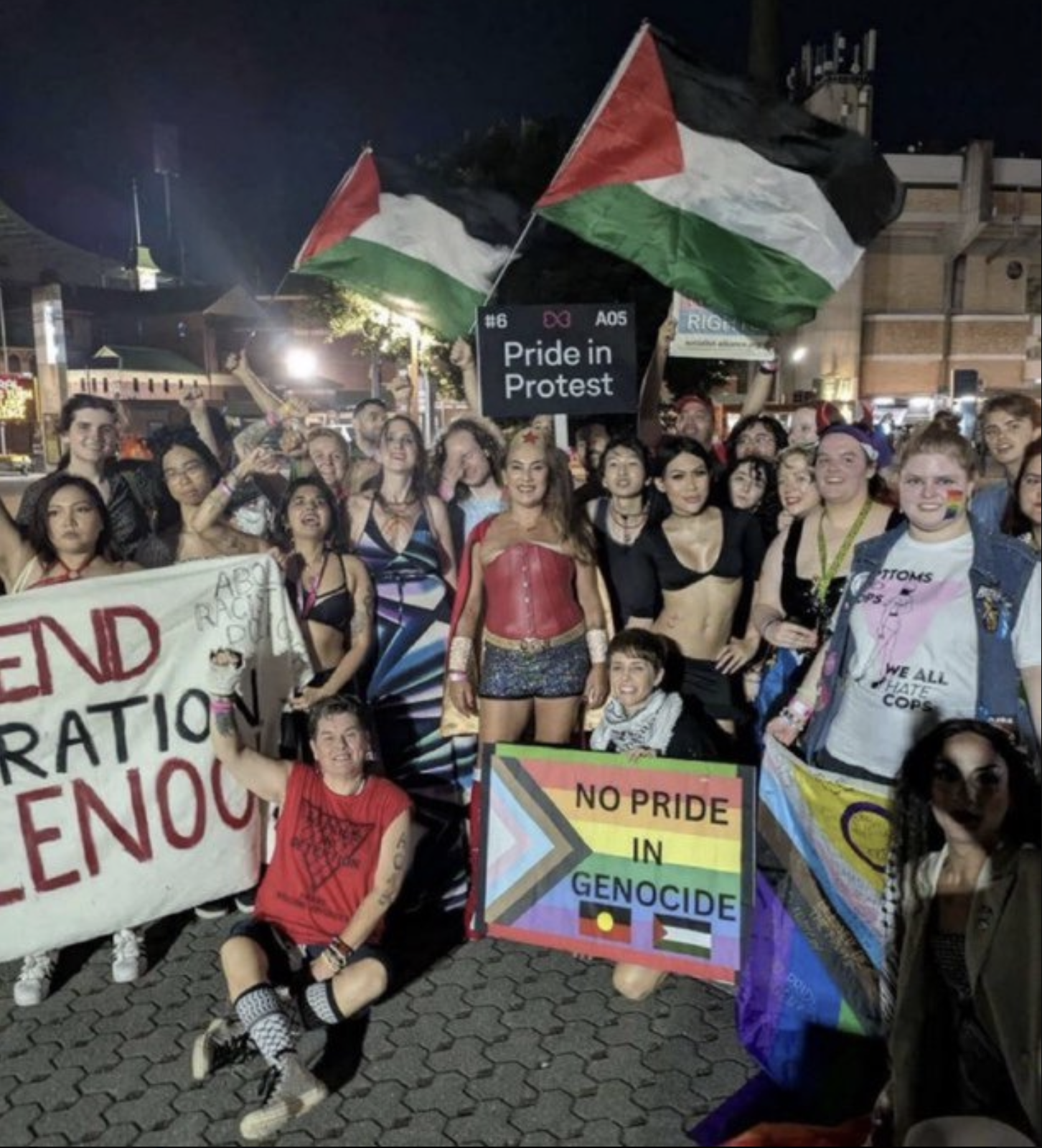
That can produce some very strange alliances. “Queers for Palestine” is perhaps the most obvious example: Western sexual-progressive movements aligning themselves symbolically with a society whose actual cultural and religious assumptions concerning sexuality are radically different from their own.
When Biblical Principles Become Political Programs
It’s related to the concern I raised in my recent Politics with a Proof Text piece. We begin with something Christians certainly affirm—love the stranger, protect the vulnerable, care about the poor—and then quietly import an entire political philosophy involving colonialism, oppression, reparations, redistribution, immigration policy, borders, and the Global North versus the Global South. At some point we have moved from biblical moral principles into prudential political judgments, while continuing to speak as though Scripture itself settled the policy question.
That’s something I want us to examine rather than simply assume.
Why I Support Israel
One other clarification about my own support for Israel. I’m not supporting Israel because I hold the dispensationalist or end-times theology common among many evangelical Christians. Ambassador Mike Huckabee, for example, has repeatedly grounded his support for Israel in biblical promises to Abraham and the Jewish people, and that broader Christian Dispensationalist tradition.3Dispensationalism places Israel at the absolute center of God’s redemptive timeline. The system holds that Old Testament covenantal promises to Abraham and David will be fulfilled literally in a future age, with modern Israel’s 1948 establishment representing the fulfillment of God’s land promise to the Jewish people. This conviction fundamentally shapes how dispensationalists interpret prophecy and understand contemporary events.
The entire dispensational prophetic scheme depends on Israel’s existence as a nation-state; without it, the entire framework collapses. Dispensationalists maintain that God maintains separate purposes for national Israel and the church, a distinction that remains central to their theological system.
Since Israel’s modern establishment, dispensationalists view the rapture of the church as the next prophetic event on God’s timeline. The tradition is often tied to a particular eschatological reading of the modern state of Israel.
I don’t share that theology.
The Facts on the Ground
My support for Israel rests much more on the facts on the ground: Israel’s comparative religious pluralism, the rights afforded to religious minorities, the political participation of its Arab and Muslim citizens, freedom of worship, and the striking contrast between the continued presence of a large Muslim minority inside the Jewish state and the tiny or nonexistent Jewish communities across much of the surrounding Muslim-majority world. None of that makes Israel above criticism. But it does matter when I’m trying to decide what kind of society Israel is, what kind of societies surround it, and how Christians should think morally about the conflict.
Gaza, then, becomes an especially important case study in how we apply these moral categories.
The Larger Christian Question
The same larger question runs through a lot of what I’ve been writing about lately—Israel and Gaza, immigration and poverty, gender ideology, and our obligations toward vulnerable people:
What does a genuinely Christian understanding of the human person require of us—and where have we perhaps confused Christian moral teaching with a particular contemporary political ideology, one often deeply influenced—knowingly or not—by strains of cultural Marxism?
That’s the discussion I’m really interested in having with you.
The longer version is going to take me a little time. But that’s where I’m headed.
+++